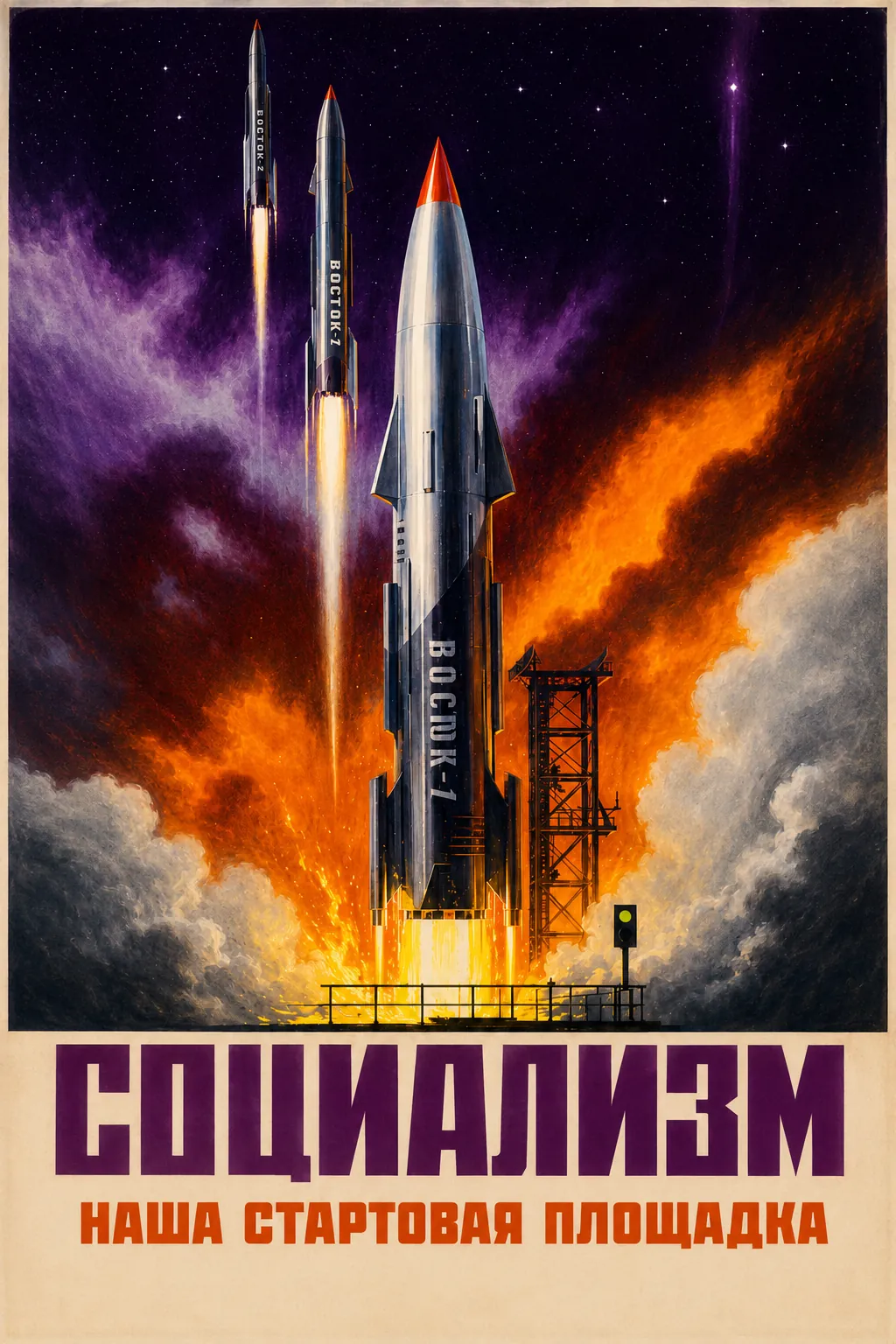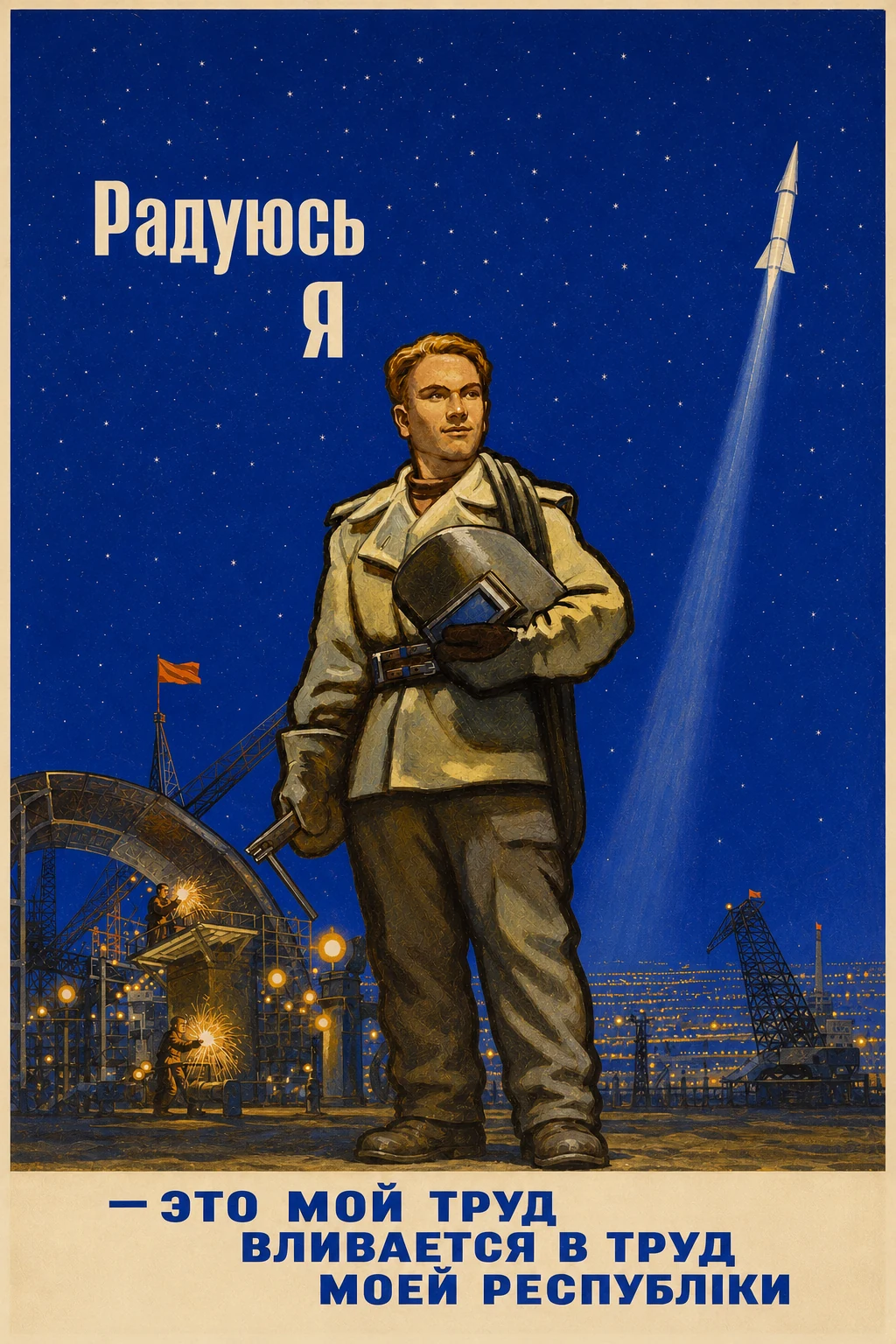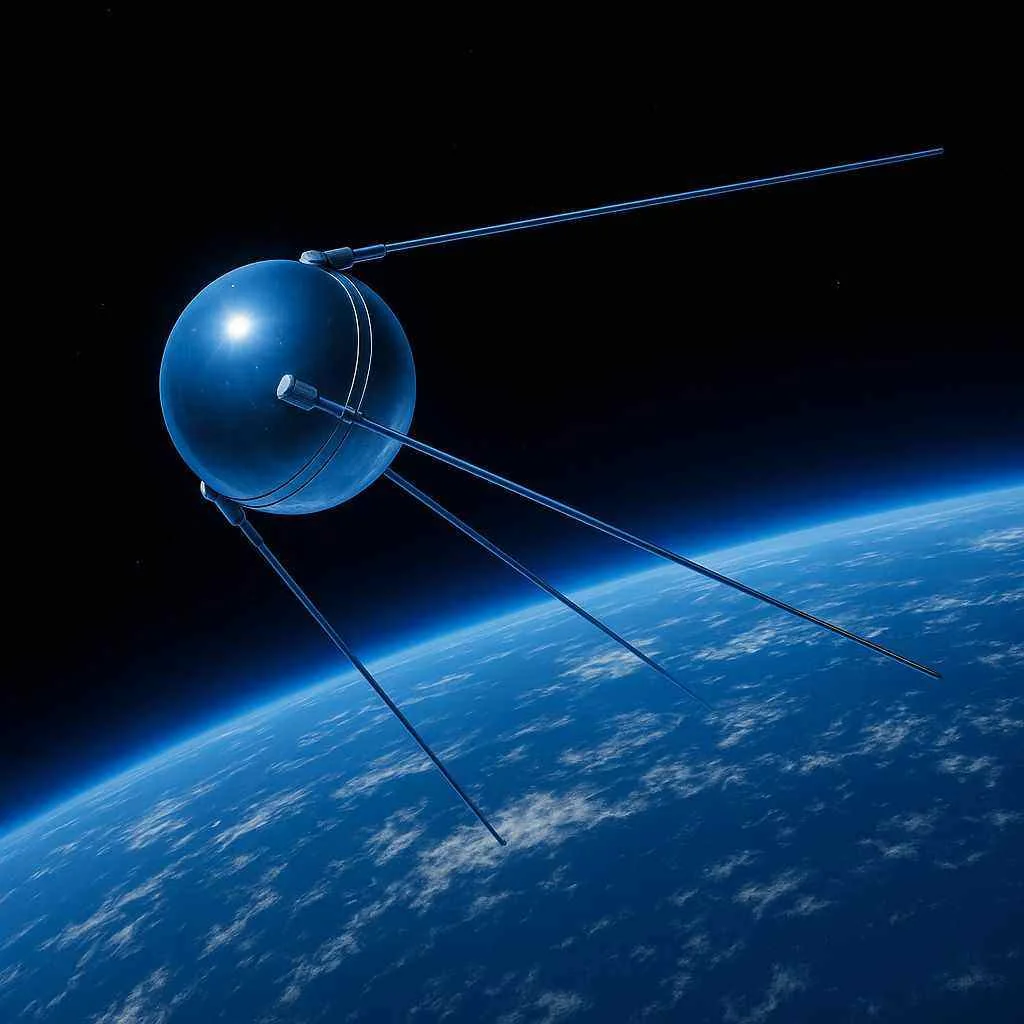
Illustration of Sputnik 1. The image is not a photograph taken during the 1957 mission.
The Sputnik signal turned a Soviet launch announcement into something listeners could detect for themselves. After Sputnik 1 entered orbit on October 4, 1957, its repeating radio pulses became the sound of the new space age.
Those beeps did not contain spoken messages or photographs. They gave observers a signal to receive and track, while the satellite's passage demonstrated that an artificial object could circle Earth.
Why was the Sputnik signal convincing?
A government could announce a launch, but an orbiting radio source offered an observation beyond the announcement. Listeners needed suitable receiving equipment and the satellite above their horizon; hearing it was not the same as seeing a point of light in the sky. Repeated passes gave stations opportunities to receive the signal as the spacecraft moved around Earth.
NASA's history of Sputnik and the space age connects the flight to the scientific and political plans that preceded it. The satellite was a small payload, yet the rocket that placed it in orbit raised a much larger strategic question.
A launcher capable of reaching orbital speed also drew attention to Soviet long-range rocket technology. The sound itself did not measure that threat; it made the orbital achievement hard to dismiss.
How long did the beeping last?
The radio mission and the orbital mission ended on different dates. NASA's historical account records roughly three weeks of transmissions and three months in orbit.
The satellite continued circling Earth after it fell silent and reentered in January 1958. Losing a radio signal does not, by itself, prove that an object has landed or burned up.
October 4 marks launch. The end of transmission marks the loss of that observing channel. Reentry marks the physical end of the satellite's time in orbit. The Sputnik mission guide provides the spacecraft dimensions, frequencies and orbital context; the reference table here focuses on what each milestone actually establishes.
What changed on the ground?
The U.S. Office of the Historian's account describes the American reaction and the pressure to respond. Sputnik became a measure of technological competition, with consequences for education, defense debates and the organization of the U.S. space effort. Those responses developed over time. They were not all decisions made on launch night.
NASA's Sputnik history collection brings together records that let readers trace that response beyond the familiar audio clip. For the Soviet side, the Cold War origins of the program explain why a small satellite could carry such political weight. The rocket-development history follows the hardware behind the signal.
Sputnik 1: Event and Evidence Guide
Use this distinction sheet to avoid confusing a radio observation, an orbital milestone and a political consequence.
| Milestone | Date or period | What it establishes | Source |
|---|---|---|---|
| Launch | 1957-10-04 | First artificial Earth satellite entered orbit | nasa.gov |
| Radio transmissions | About three weeks after launch | Operating transmitter, not the total orbital lifetime | nasa.gov |
| Reentry | January 1958 | End of the satellite's time in orbit | nasa.gov |
| American policy response | 1957 onward | A sequence of decisions, not one launch-night event | history.state.gov |
Download the source-linked reference table (CSV). Permanent link to this table. Cite this article and the original sources listed in each row.
Frequently Asked Questions
Did Sputnik broadcast a voice message?
No. Sputnik 1 transmitted repeating radio pulses. Its famous beeps were not a recording of a person speaking.
Did Sputnik fall out of orbit when its radio stopped?
No. Radio transmission ended before reentry. The satellite continued orbiting after its batteries could no longer power the transmitter.
Was Sputnik launched in 1957 or 1958?
Sputnik 1 launched on October 4, 1957. It reentered Earth's atmosphere in January 1958.
Follow the Soviet space program timeline for the missions and decisions surrounding this date, or browse more space history articles.
By Soviet Space Program. Published . Historical date: .