Soviet Space Program
The Soviet space program launched Sputnik, sent Yuri Gagarin into orbit and built Salyut and Mir. Follow the USSR's missions, rockets and cosmonauts from the first satellite in 1957 to the country's dissolution in 1991.
Soviet space timelineWhat Was the Soviet Space Program?
It was a network of Soviet design bureaus, factories, military organizations and research institutes, not one agency. Spaceflight grew from the USSR's missile program: the R-7 intercontinental ballistic missile became the launcher for Sputnik. Civilian research and military requirements shared hardware, funding and people.
Early successes gave the USSR a lead in the Cold War space race. The record also includes failed launches, fatal missions and a lunar landing project that never carried a crew. After the Moon race, long-duration stations became a major focus. The seven named Salyut stations and Mir were different projects, not eight identical or equally successful outposts.
Sources: NASA's Sputnik history, Sputnik and the Creation of the Soviet Space Industry (PDF), NASA's Soviet station history.
Three Missions That Changed Spaceflight
Sputnik 1: First Artificial Satellite
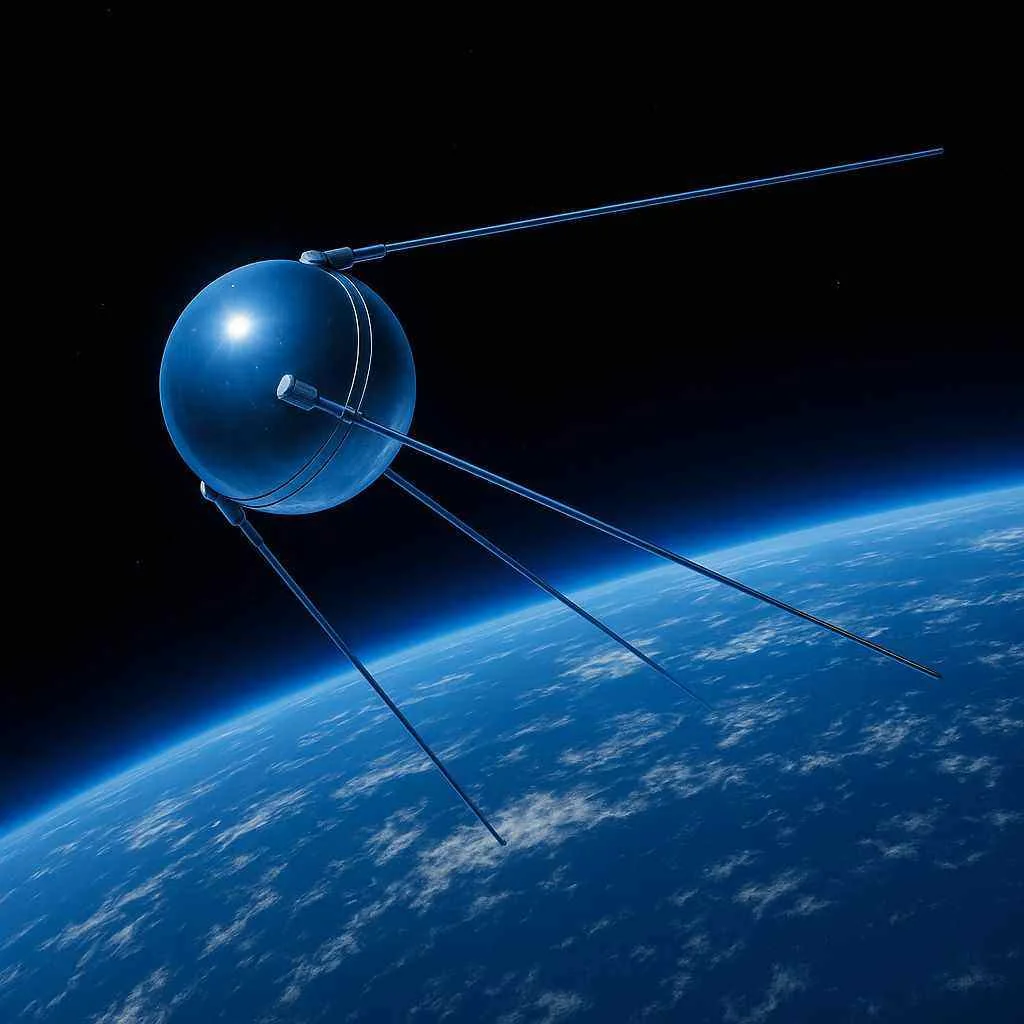
On October 4, 1957, the USSR put Sputnik 1 into Earth orbit. Its radio signals made a secret missile program audible around the world.
Sputnik 1's mission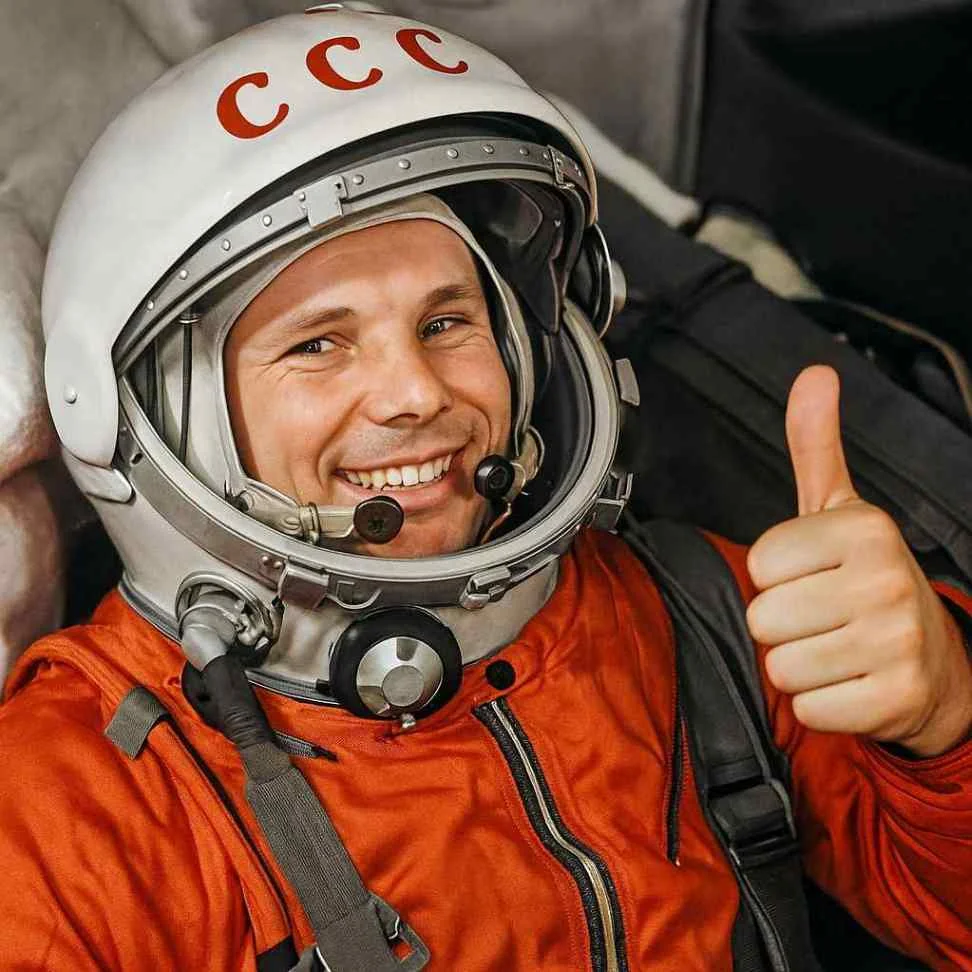
Yuri Gagarin: First Human in Space
Gagarin flew aboard Vostok 1 on April 12, 1961. His 108-minute flight proved that a person could orbit Earth and return alive.
Gagarin's Vostok 1 flight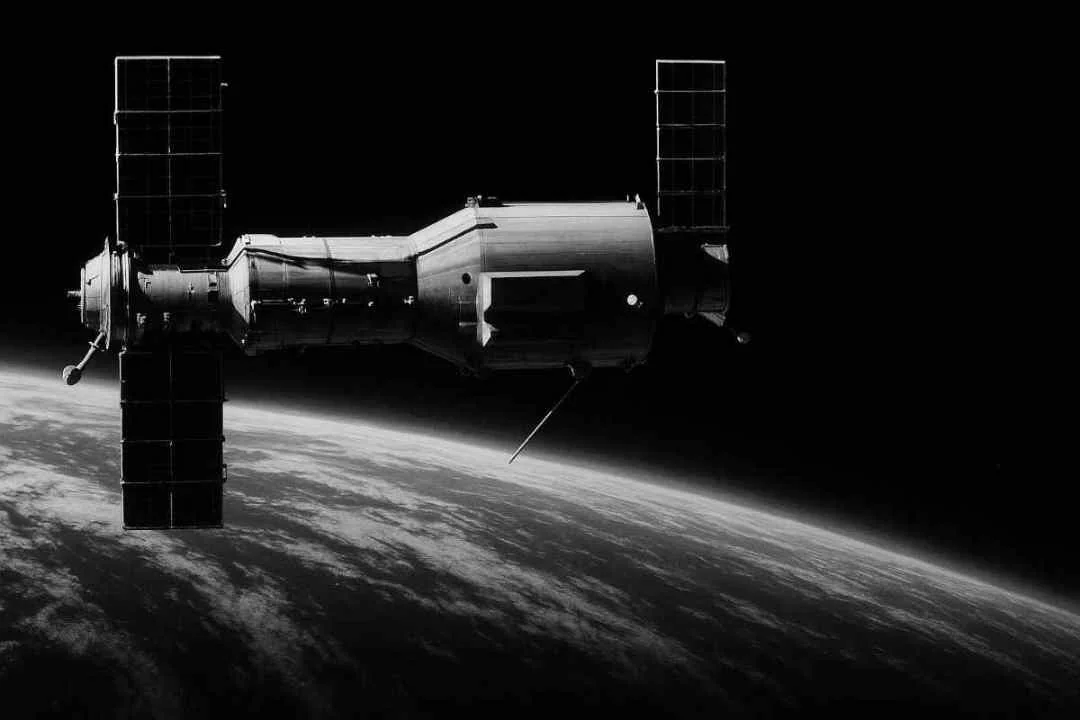
Salyut 1: First Space Station
Launched on April 19, 1971, Salyut 1 gave a crew a place to live and work in orbit. Its mission also exposed the risks of the early Soyuz system.
Salyut 1 and its crewMission references: Sputnik 1, Gagarin's flight, Salyut 1.
Soviet Space Missions and Programs
A program name might refer to a satellite, a spacecraft or a launcher. Soyuz is used for both a spacecraft and a rocket family; they are separate vehicles.
| Program | Main role | Missions and hardware |
|---|---|---|
| Sputnik | Early satellites | Sputnik 1 opened the orbital era in 1957. |
| Vostok and Voskhod | Early crewed flights | Gagarin's first orbit, Tereshkova's flight and Leonov's spacewalk. |
| Soyuz | Crew transport and docking | Spacecraft for independent missions and travel to space stations. |
| Luna and Venera | Robotic exploration | Lunar landers, sample returns and probes to Venus. |
| Salyut and Mir | Space stations | Civilian research, military stations and long-duration crews. |
| N1-L3 and Energia-Buran | Large launch systems | The unsuccessful crewed lunar project and the later Buran shuttle flight. |
Soviet Space History, 1957-1991
- 1957-1965
The early space firsts
Sputnik, Laika, Gagarin, Valentina Tereshkova and Alexei Leonov made the USSR the first to launch a satellite, an animal into orbit, a human, a woman and a spacewalker.
- 1959-1970
Robots reach the Moon and Venus
Luna missions photographed the Moon's far side, made a soft landing and returned soil. Venera 7 transmitted from the surface of Venus in 1970.
- 1969-1976
The Moon landing program fails
Four N1 rocket tests failed between 1969 and 1972. The USSR never sent a crew to the Moon; the N1-L3 project was suspended in 1974 and formally terminated in 1976.
- 1971-1986
Long stays in Earth orbit
Salyut stations became laboratories for extended missions. Apollo-Soyuz brought a joint flight with the United States in 1975, and Mir's core module launched in February 1986.
- 1991 and after
The Soviet program becomes a shared inheritance
The USSR dissolved in December 1991. Russia continued Soyuz and Mir operations, while factories, launch sites and expertise also remained in other former Soviet republics.
Sources: NASA lunar history, robotic exploration chronology, Challenge to Apollo, part 2 (PDF), Mir's first module.
Full Soviet space program timelineWho Ran the Soviet Space Program?
Sergei Korolev led OKB-1, the bureau behind Sputnik and Vostok. His rivals and collaborators had their own organizations: Vladimir Chelomei developed Proton, while Valentin Glushko led major engine programs and later Energia. Political leaders approved projects and resources; the Academy of Sciences helped shape scientific missions.
This is why searches for a single “Soviet space agency” can be misleading. NASA was a separate US civilian agency. Soviet responsibilities were spread across ministries and bureaus. The Russian Space Agency was established in 1992, after the USSR dissolved. Modern Russian spaceflight and the Soviet program are connected, but they are not interchangeable names.
Sources: Soviet space industry organization (NASA Technical Reports Server, PDF) and Boris Chertok's Rockets and People.
Read More About the USSR in Space
Cold War origins
Why the Soviet leadership funded missiles, satellites and spaceflight.
Soviet rockets and engines
Compare R-7, Soyuz, Proton, N1 and Energia, and the engines that powered them.
Cosmonauts and crewed missions
The people aboard Vostok, Voskhod and Soyuz, including the crews who did not return.
Salyut and Mir space stations
Launch dates, military and civilian designs, docking ports and station modules.
Luna, Venera and Mars probes
The landers, rovers and sample-return missions beyond Earth orbit.
Space propaganda and culture
Gagarin's public image, monuments, cinema and everyday Soviet space imagery.
The Soviet program's legacy
What survived the USSR, from Soyuz designs to the institutions of Russian spaceflight.
Primary sources and archives
NASA histories, engineers' memoirs and declassified documents for further research.
Soviet-style space posters
Original illustrated prints inspired by the missions, rockets and visual culture.
Soviet Space Program FAQ
What was the Soviet space program?
The Soviet space program was the USSR's state-funded effort to develop rockets, satellites, crewed spacecraft and robotic probes. It grew out of postwar missile work and achieved orbital flight with Sputnik 1 in 1957. Soviet missions continued until the country dissolved in 1991; several systems then continued under successor states.
When did the Soviet space program start?
October 4, 1957, the launch of Sputnik 1, marks the start of the Soviet orbital space era. The engineering effort was older: postwar Soviet missile development preceded the satellite program. There was no single founding day for a Soviet agency equivalent to NASA.
What was the Soviet space agency called?
The USSR did not have one civilian space agency organized like NASA. Design bureaus, industrial ministries, the military and the Academy of Sciences shared responsibility. Glavkosmos became a public-facing organization in the 1980s, but it did not replace that whole system. The Russian Space Agency was established in 1992, after the Soviet Union ended.
Who led the Soviet space program?
Sergei Korolev led the OKB-1 design bureau behind the R-7, Sputnik and Vostok. He was the best-known chief designer, not the head of every Soviet space project. Other bureaus led by figures such as Vladimir Chelomei and Valentin Glushko developed competing launchers, engines and spacecraft under government direction.
What were the Soviet space program's biggest achievements?
Its firsts included the artificial satellite Sputnik 1, Yuri Gagarin's human spaceflight, Valentina Tereshkova's flight, Alexei Leonov's spacewalk and Salyut 1, the first space station. Robotic missions added lunar soft landings, lunar sample returns and data transmitted from the surface of Venus.
Did the Soviet Union land a person on the Moon?
No. Four uncrewed N1 rocket tests failed, and the N1-L3 crewed lunar project was abandoned. Soviet Luna spacecraft did land on the Moon and return samples, but those were robotic missions, not cosmonaut landings.
Is the Soviet space program the same as Roscosmos?
No. Soviet refers to the USSR, which dissolved in 1991. Russia inherited much of its space infrastructure and established the Russian Space Agency in 1992. Roscosmos belongs to the later Russian system. Soviet-era designs such as Soyuz continued, but the countries, institutions and funding arrangements changed.