Soviet rockets were built by several competing design bureaus. Korolev's R-7 family launched Sputnik and Gagarin, Chelomei's Proton carried heavy spacecraft, and the N1 and Energia pursued much larger payloads. These were separate designs with different missions, not successive versions of one rocket.
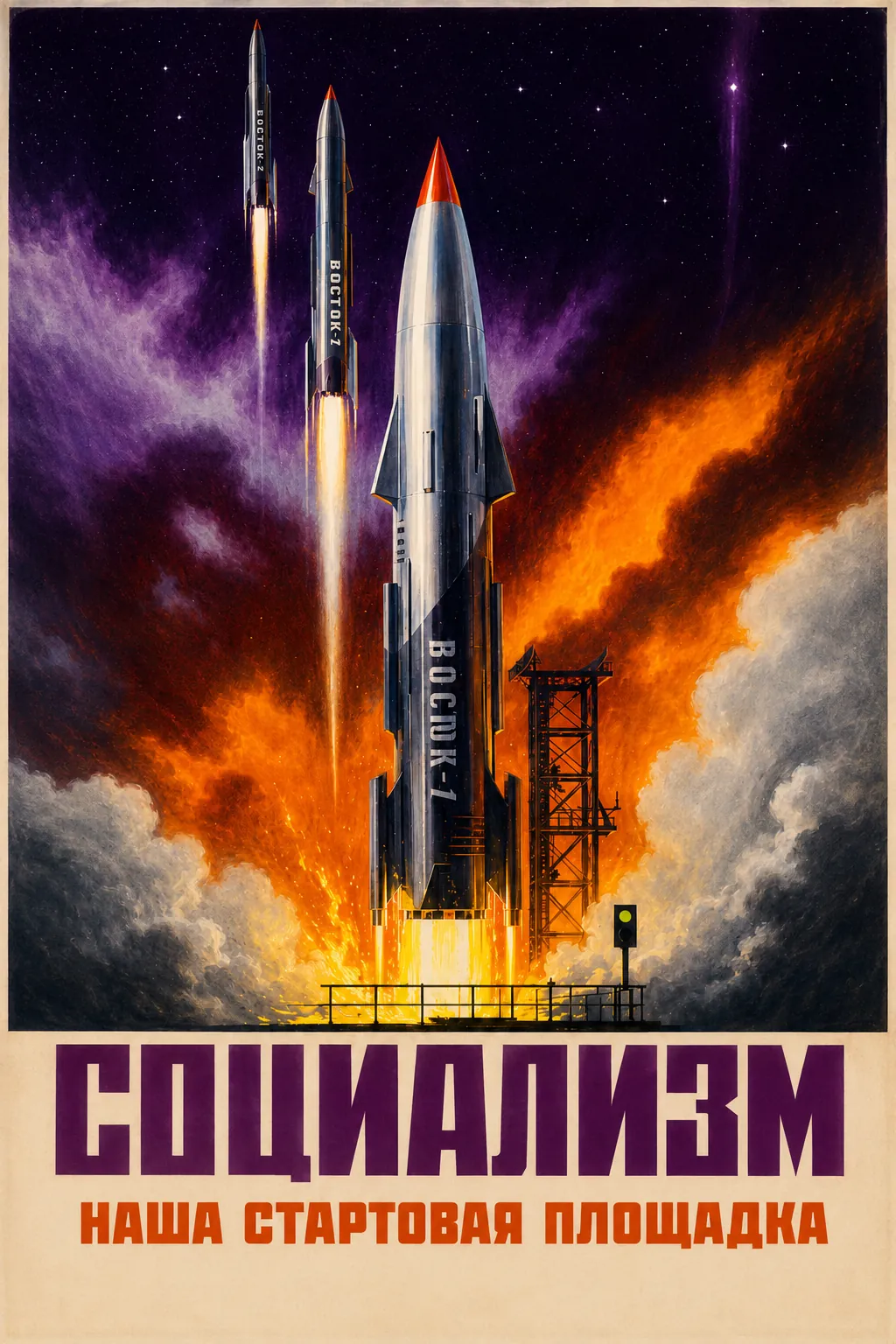
Jump to: rocket comparison, R-7 family, N1 failures, Proton, Energia and Buran, engine guide, S1.5400, modern Russian rockets or FAQ. Hero image: AI-generated illustration, not an archival photograph. Reviewed September 4, 2026.
Major Soviet Rockets Compared
| Rocket | First flight | Lead design organization | Purpose and record |
|---|---|---|---|
| R-1 | 1948 | Korolev's team at NII-88 | Soviet-built V-2 derivative; ballistic missile, not an orbital launcher. |
| R-7 | 1957 | Korolev / OKB-1 | ICBM adapted to launch Sputnik; ancestor of Vostok, Molniya and Soyuz launchers. |
| Soyuz (11A511) | 1966 | OKB-1 and its successor organization | R-7 derivative for the Soyuz spacecraft; later versions also carried Progress and satellites. |
| Proton (UR-500) | 1965 | Chelomei / OKB-52 | Heavy satellites, planetary missions and station modules; no crewed launches. |
| N1 | 1969 | Korolev's bureau, later led by Mishin | Super-heavy launcher for the N1-L3 lunar project; all four flight tests failed. |
| Energia | 1987 | Glushko / NPO Energia | Super-heavy launcher; two flights, carrying Polyus and then Buran. |
The R-1 and the Origins of Soviet Rocketry
The first postwar Soviet missile work began with captured German V-2 hardware and technical knowledge. Tests of assembled V-2s in 1947 came before the Soviet-built R-1 tests in 1948. The R-1 reproduced much of the German design using a Soviet production system. It gave engineers experience with engines, guidance, manufacture and launch operations. Anatoly Zak's R-1 history distinguishes those two test campaigns.
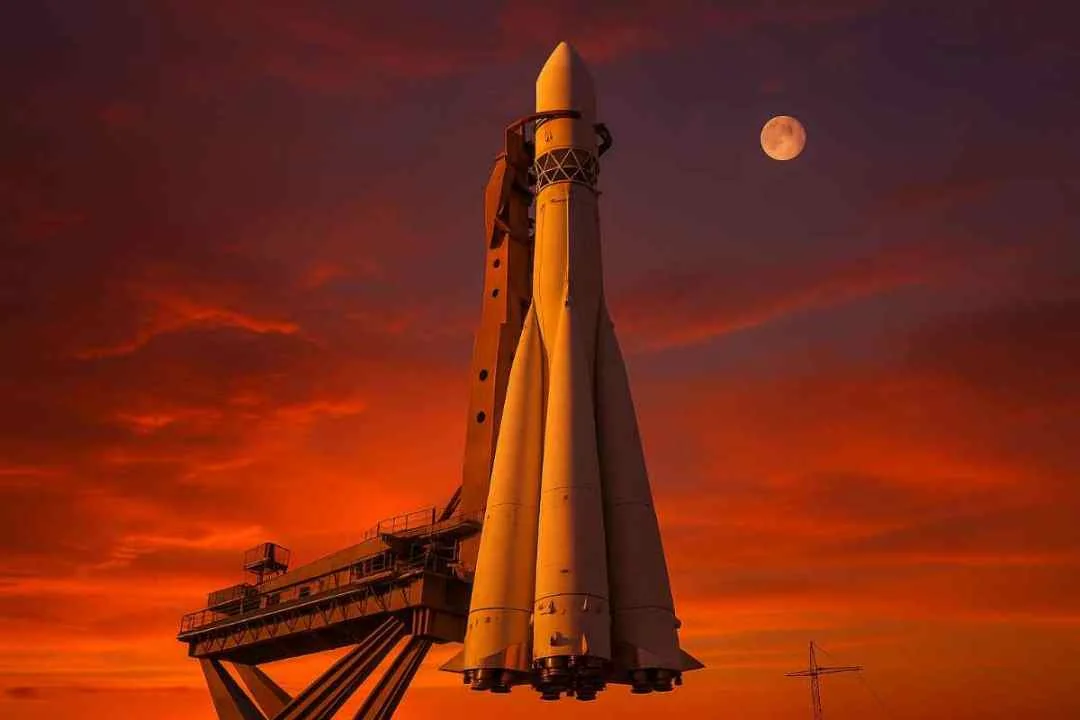
The leap to orbit came later. Sergei Korolev led the R-7 project, a large missile whose lift capability also made a satellite possible. Its four side boosters and central core became the recognizable shape of a long-lived launch family. The political and military reasons for that investment are covered in the origins of the Soviet space program.
R-7 Family Tree: Sputnik, Vostok, Molniya and Soyuz
The family relationship is clearest when payloads and launchers are kept separate. Sputnik was a satellite; Vostok and Soyuz were spacecraft as well as names used for launch vehicles. Adding upper stages let R-7 derivatives carry heavier payloads or send probes beyond low Earth orbit. ESA's launcher guide explains the Soyuz stage sequence.
The Main R-7 Branches
| Launcher branch | How it fits the family | Example mission or payload |
|---|---|---|
| Sputnik launcher | R-7 adapted for satellite launch, without the later orbital upper stages. | Sputnik 1, October 4, 1957. |
| Vostok | R-7 derivative with a Block E upper stage. | Gagarin's Vostok 1 spacecraft, April 12, 1961. |
| Molniya | Four-stage derivative with a Block L upper stage. | Early interplanetary probes and Molniya communications satellites. |
| Voskhod and Soyuz | Branches using a higher-performance third stage; later Soyuz versions added further upgrades. | Crewed spacecraft, reconnaissance satellites and Progress cargo vehicles. |
| Soyuz-2.1a and Soyuz-2.1b | Post-Soviet versions retaining the core and four side-booster arrangement; upper stages vary by mission. | Soyuz-MS spacecraft on 2.1a; satellite missions on both variants. |
The N1 Moon Rocket: Four Failed Flight Tests
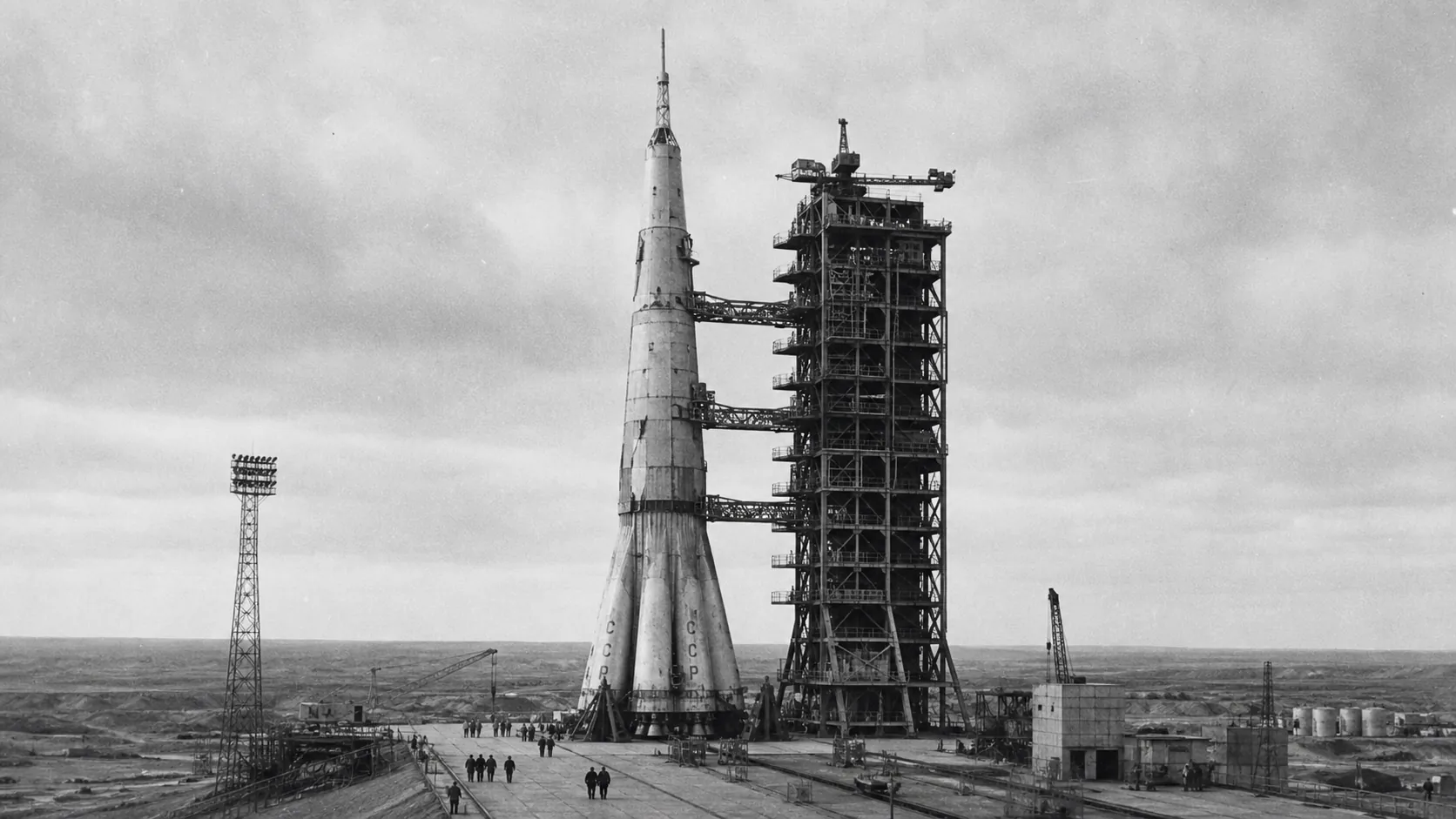
The N1 was the launch vehicle for the N1-L3 crewed lunar landing project. Its first stage, Block A, clustered 30 NK-15 engines. The launcher had three main ascent stages, with further propulsion stages in the lunar payload. The whole first stage was never ground-fired as an integrated unit before launch. That testing decision mattered, but it does not make the four failures one identical engine problem. NASA's Challenge to Apollo documents the program and its testing disputes.
| Test | Date | What happened |
|---|---|---|
| 3L | February 21, 1969 | Leaks and fire damaged wiring; the control system shut down the first-stage engines during ascent. |
| 5L | July 3, 1969 | A turbopump exploded at liftoff, followed by engine shutdowns. The rocket fell back and destroyed its launch pad. |
| 6L | June 27, 1971 | The vehicle developed an uncontrolled roll and broke up. The problem was not simply that all 30 engines failed. |
| 7L | November 23, 1972 | The first stage broke up about 107 seconds into flight, shortly before planned separation. The precise initiating cause remains uncertain. |
The lunar project was suspended in 1974 and formally terminated in 1976. Improved engines and additional vehicles did not get another flight test. The USSR's successful robotic Luna missions were a separate program; they did not demonstrate that the N1 was ready to carry cosmonauts.
Proton: Chelomei's Heavy Launcher
Proton came from Vladimir Chelomei's UR-500 project, not Korolev's R-7 bureau. It first launched on July 16, 1965. The name came from the early Proton scientific satellites it carried. Despite its missile origins, the UR-500 was used as a space launcher rather than deployed as an operational ICBM. ILS's Proton history describes that transition.
The main stages burned nitrogen tetroxide and UDMH, a toxic fuel pair that ignites on contact. These storable propellants avoided the handling demands of liquid oxygen, at an environmental and safety cost. Proton carried Salyut stations and Mir's large modules. Not every Mir component arrived on Proton: the Space Shuttle Atlantis delivered the docking module on STS-74. The Salyut and Mir comparison lists the stations and modules separately.
Energia and Buran: Two Launches, One Shuttle Flight
Energia paired four liquid-oxygen/kerosene boosters with a liquid-oxygen/liquid-hydrogen core. Unlike the US Space Shuttle, Buran did not carry the launch system's main ascent engines on the orbiter. Energia could carry another payload in its place. NASA's launch-system comparison shows the different architectures.
The first Energia launch in May 1987 carried Polyus. The launcher flew, but a payload maneuver failure prevented Polyus from reaching orbit. On November 15, 1988, Energia launched Buran, which completed two orbits and an automatic landing without a crew. That was Buran's only spaceflight. See NASA's translated space-policy documents for contemporary accounts of the flight.
How Energia and Zenit Were Related
Energia's side boosters and Zenit's first stage shared engineering work, including closely related engines. Energia used the four-chamber RD-170; Zenit used the RD-171 variant. Zenit was a separate launch vehicle, not an Energia upper stage. Chertok discusses their development and testing in Rockets and People, volume 4, printed page 575.
Soviet Rocket Engines and Their Descendants
Engine names are not a single family tree. Different bureaus developed different propellants and combustion cycles. The number after RD or NK is a designation, not a power rating. An engine can also have several combustion chambers: Atlas V's RD-180 is one engine with two chambers.
| Engine or family | Propellants | Application |
|---|---|---|
| RD-107 / RD-108 | Liquid oxygen + kerosene | R-7 side boosters / central core; updated versions power mainstream Soyuz launchers. |
| S1.5400 | Liquid oxygen + kerosene | Molniya's Block L upper stage; developed at OKB-1 under Mikhail Melnikov. |
| NK-15 / NK-33 | Liquid oxygen + kerosene | Kuznetsov engines for N1's first stage. NK-15 flew on N1; improved NK-33 did not fly on N1. |
| RD-253 / RD-275 | Nitrogen tetroxide + UDMH | Proton first-stage engine family. |
| RD-170 / RD-171 | Liquid oxygen + kerosene | Related four-chamber engines for Energia's boosters and Zenit's first stage. |
| RD-0120 | Liquid oxygen + liquid hydrogen | Energia core-stage engine, a different design line from the kerosene engines. |
| RD-180 | Liquid oxygen + kerosene | Post-Soviet two-chamber derivative of the RD-170 design family for Atlas V. |
| RD-191 | Liquid oxygen + kerosene | Post-Soviet single-chamber member of that design family for Angara. |
S1.5400: Melnikov's Molniya Upper-Stage Engine
The S1.5400 is easy to overlook beside the large booster engines. It belonged to Block L, the fourth stage of the R-7 derivative used for Molniya and early deep-space launches. Boris Chertok's Rockets and People, volume 2 identifies Mikhail Melnikov as its designer within Korolev's OKB-1. It was not a Glushko engine.
Its staged-combustion cycle sent turbine exhaust into the main chamber to finish burning, rather than releasing it separately. That is the important distinction from a gas-generator cycle. The Soviet engine record includes upper-stage work of this kind as well as the much larger engines developed for N1 and Energia.
Cryogenic and Hypergolic Propellants
Cryogenic describes a propellant stored at very low temperature, such as liquid oxygen or liquid hydrogen. Hypergolic describes a fuel and oxidizer that ignite when they meet. These terms describe different properties, not two universal classes of rocket. Soyuz uses cryogenic liquid oxygen with kerosene; Proton's main stages use a storable hypergolic pair. Mission requirements, engine design and launch-site handling all influenced the choice.
After 1991: Russian Rockets and Soviet Design Heritage
A rocket developed or launched after the USSR dissolved is not automatically a Soviet rocket. Soyuz-2 retains the R-7 lineage, while Angara is a Russian launcher program using modular stages and RD-191 engines. The first Angara flights took place in 2014, long after the Soviet period. Roscosmos's historical chronology records the light Angara test on July 9 and the Angara-A5 flight on December 23 of that year.
The RD-180 is another example of continuity without identical hardware. Its Soviet design heritage does not make it a Soviet-era flight engine. It powers the American Atlas V, and ULA's USSF-51 record labels July 30, 2024, as the final national-security Atlas V launch. That was not the retirement of Atlas V or the RD-180. ULA's Atlas V vehicle page describes the engine and launcher.
For the institutions and spacecraft that continued after 1991, see the Soviet space program's legacy. For the physical size of the vehicles, see Soviet rocket dimensions.
Soviet Rocket Poster Prints
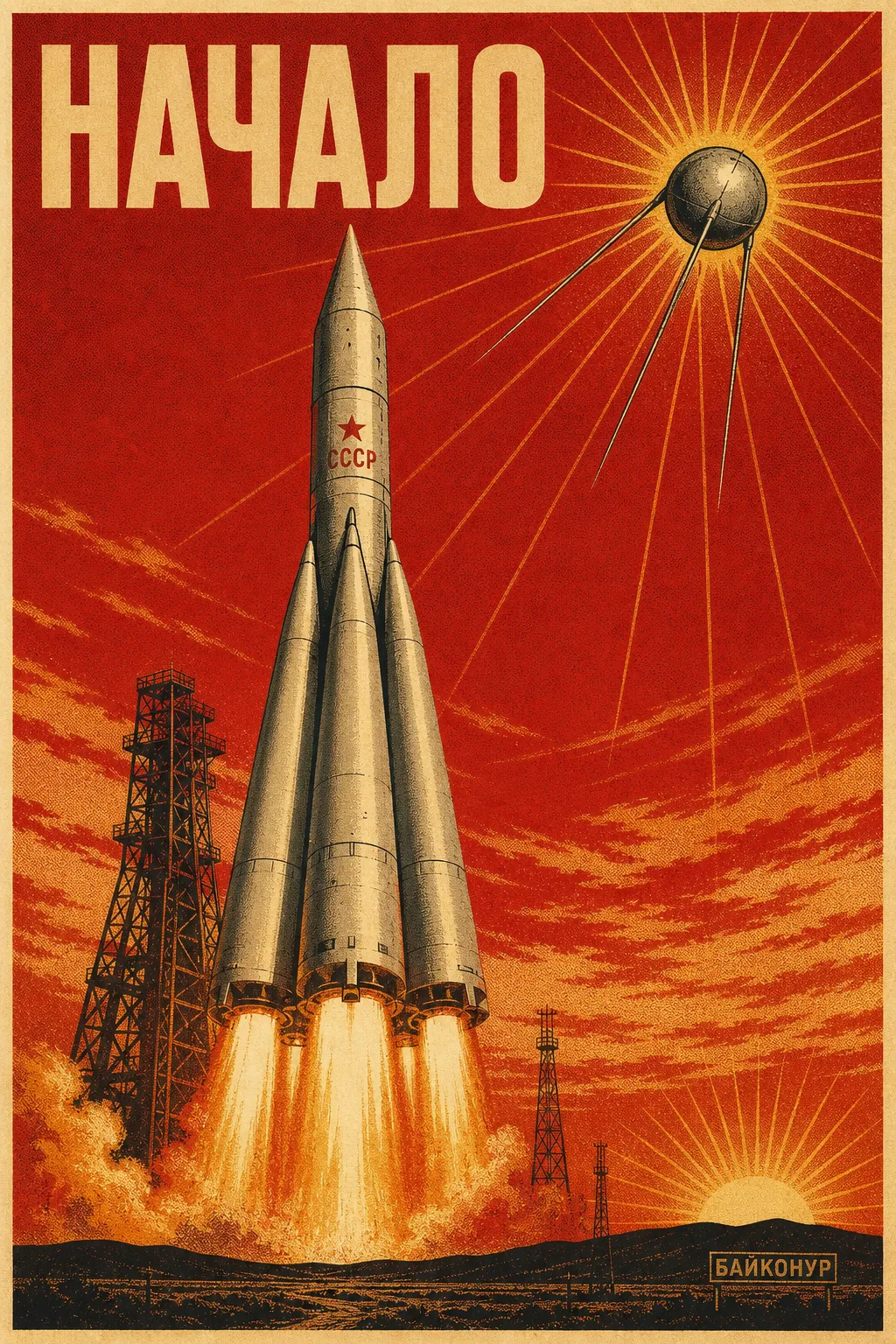
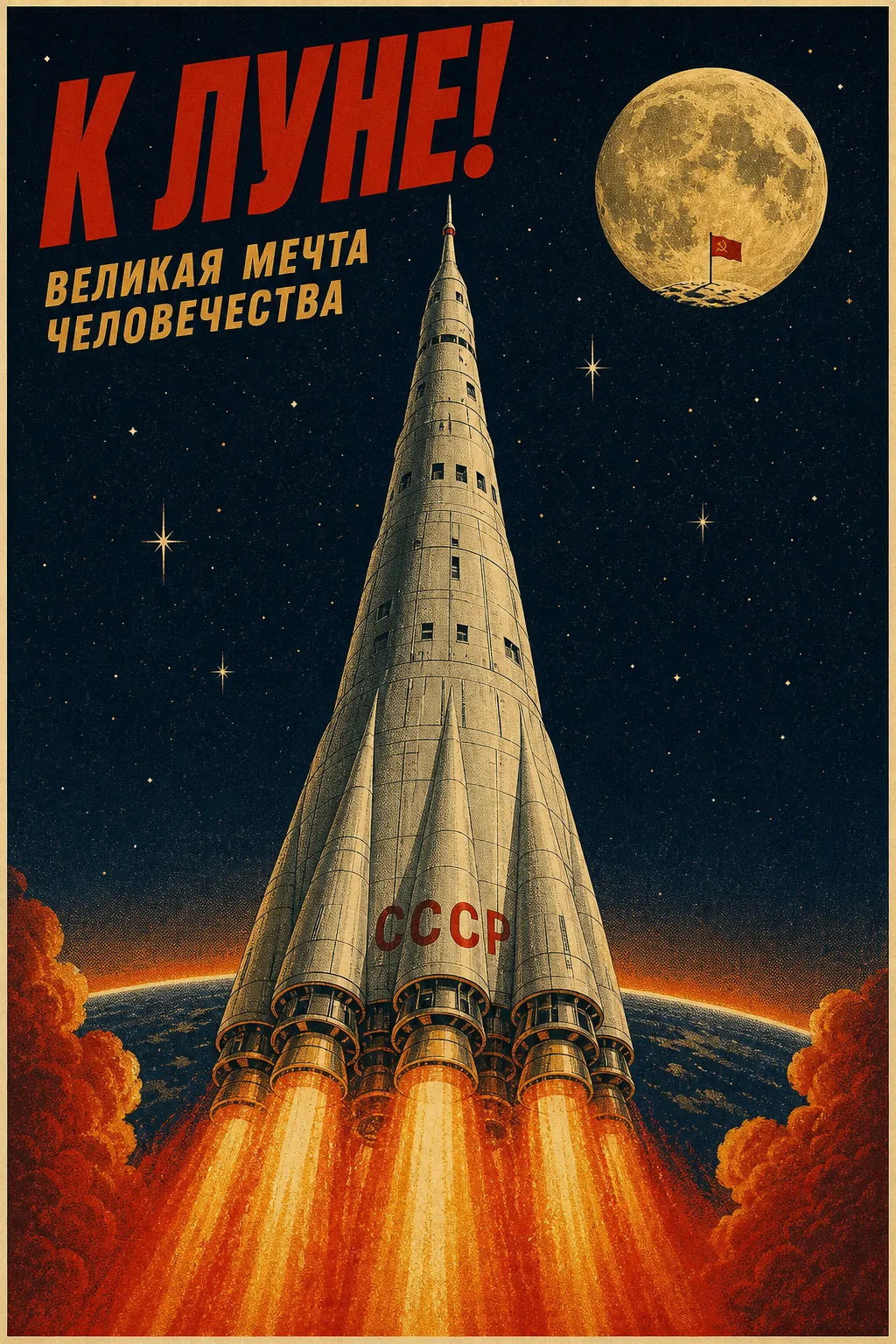
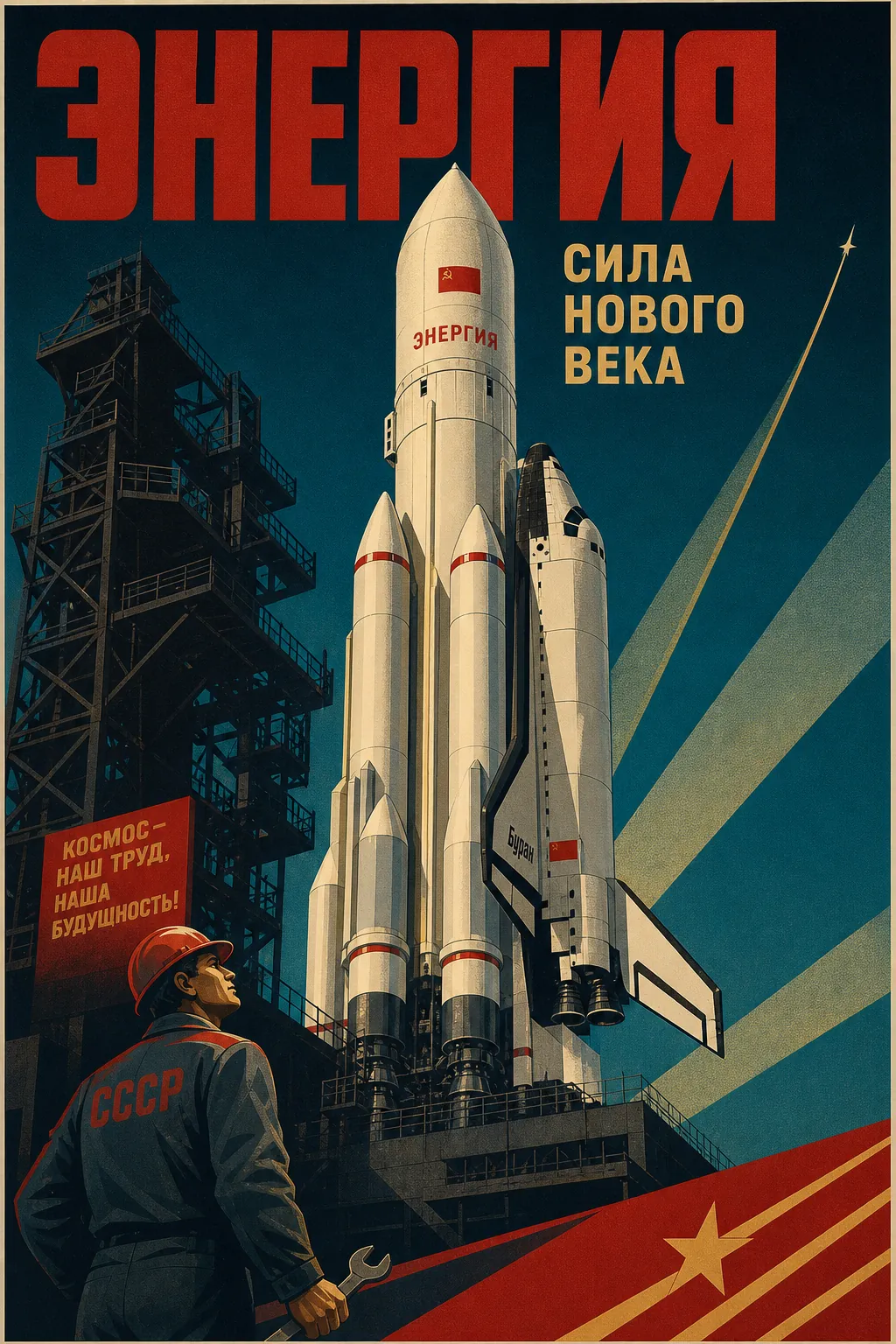
Original illustrations inspired by R-7, N1 and Energia. These are contemporary artwork, not reproductions of archival technical drawings. See the full Soviet space poster collection for available prints.
Sources and Further Reading
- NASA: Challenge to Apollo, part 2 (PDF), Asif Siddiqi's archival history of the lunar program, its tests and cancellation.
- NASA: Rockets and People, volume 2 (PDF), Boris Chertok's first-hand account; printed page 543 identifies Melnikov and the S1.5400.
- ESA: Soyuz launcher stage guide, the launch vehicle rather than the crew spacecraft.
- ILS: Proton heritage, the launch provider's account of UR-500 and the first flights.
- RussianSpaceWeb: N1 history, Anatoly Zak's archival research, with separate reports for each test.
- ULA: Atlas V and USSF-51, vehicle specifications and the scope of the July 2024 final national-security launch.
Soviet Rockets FAQ
What was the first Soviet rocket?
The R-1 was the first Soviet-built long-range ballistic missile, developed from the German V-2 and flight-tested in 1948. It was not an orbital launcher. The R-7 family opened the Soviet orbital era by launching Sputnik 1 on October 4, 1957.
Which Soviet rocket launched Sputnik and Gagarin?
Both used launchers derived from the R-7. Sputnik 1 flew on a two-stage satellite-launch version in 1957. Yuri Gagarin's Vostok 1 mission used a Vostok launcher with an added upper stage in 1961. They shared a design lineage, but were not identical rockets.
Is Soyuz a rocket or a spacecraft?
Both names exist. A Soyuz launch vehicle is an R-7-derived rocket that lifts a payload into space. A Soyuz spacecraft is the crew vehicle carried on top. Soyuz-MS names a spacecraft generation, not the rocket. Modern crew launches use the Soyuz-2.1a launcher.
Why did the Soviet N1 Moon rocket fail?
Its four tests had different failure sequences, including engine-system damage, fire, loss of roll control and a late first-stage breakup. The first stage used 30 engines and was not ground-fired as a complete stage before flight. That left major system-level problems to be found during launches. No N1 reached orbit.
What was the S1.5400 rocket engine?
The S1.5400 was a liquid-oxygen and kerosene engine for Block L, the upper stage of the four-stage R-7 derivative known as Molniya. Mikhail Melnikov's team at Korolev's OKB-1 developed it. It used staged combustion, directing turbine exhaust into the main combustion chamber instead of discarding it.
What is the difference between Proton and Soyuz?
They are separate rocket families. Soyuz descends from Korolev's R-7 and uses liquid oxygen and kerosene in its main stages. Proton originated in Chelomei's UR-500 program and uses storable, toxic hypergolic propellants in its main stages. Proton launched heavier payloads, including space-station modules; Soyuz became the regular crew transport launcher.
How many times did Energia and Buran fly?
The Energia rocket launched twice, in 1987 and 1988. Buran, the winged spacecraft, flew only on the second launch, on November 15, 1988. It completed two orbits without a crew and landed automatically. Energia's first launch carried the Polyus payload, not Buran.
Did the RD-180 engine retire in 2024?
No. The Atlas V launch of USSF-51 on July 30, 2024, was the vehicle's final national-security mission, not the final Atlas V or RD-180 flight. The RD-180 powers Atlas V's first stage. It is a later Russian engine with Soviet design heritage, not an engine that flew during the Soviet era.