Yuri Gagarin became the first human in space on April 12, 1961, when the Soviet Union launched him aboard Vostok 1. The 27-year-old pilot completed a single-orbit mission and returned alive. NASA's mission summary records a flight of 108 minutes, a figure that includes launch and descent as well as time in orbit.
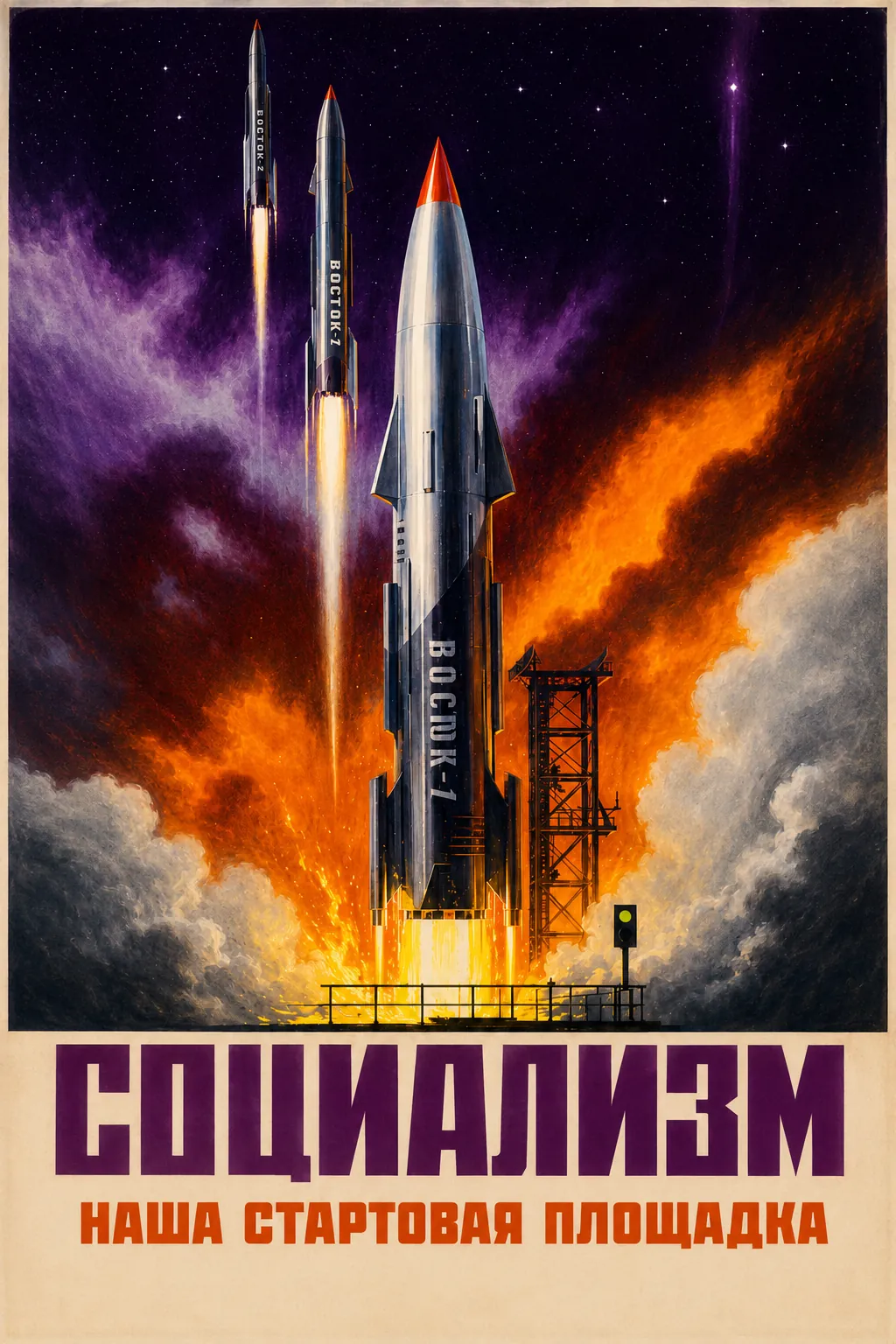
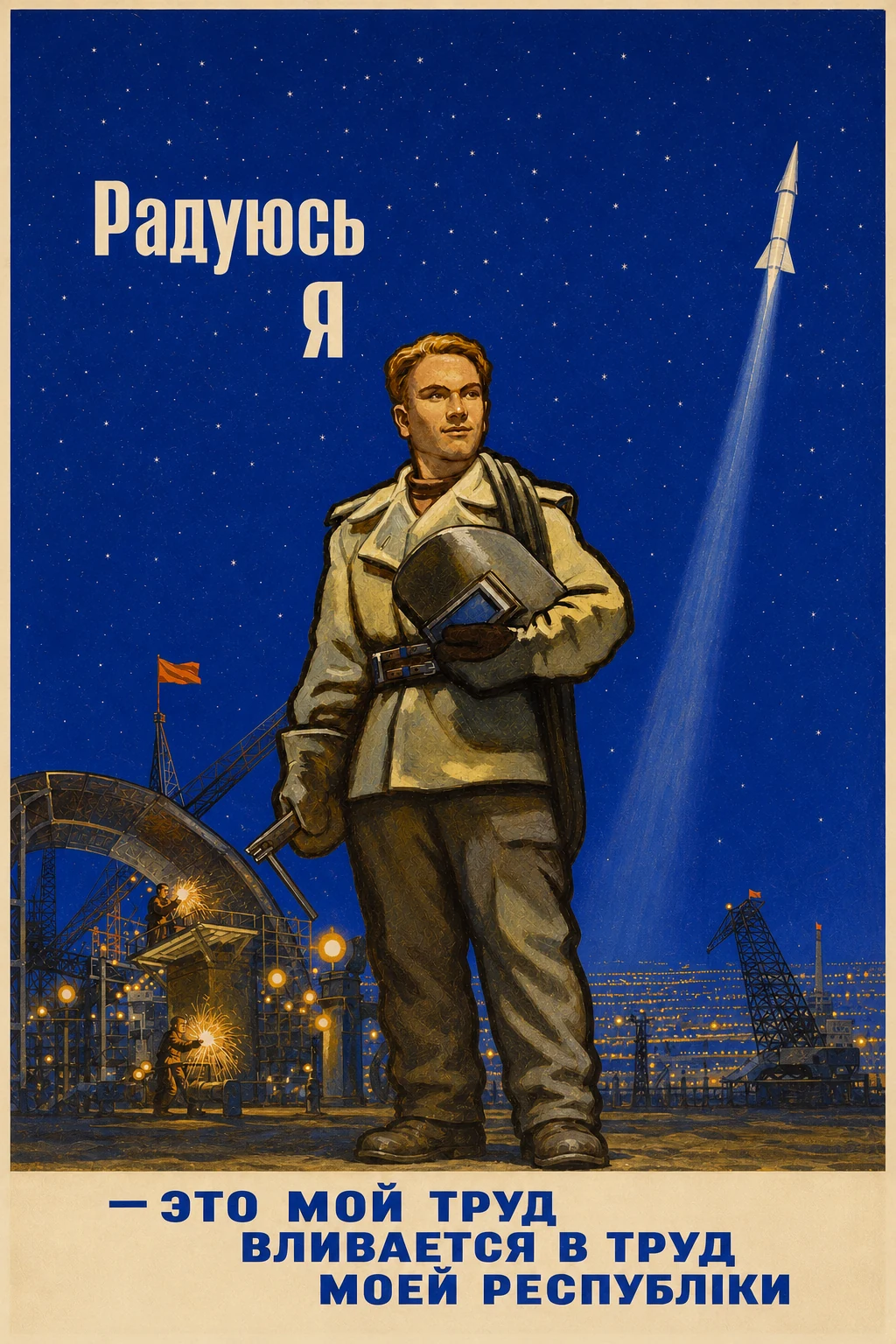
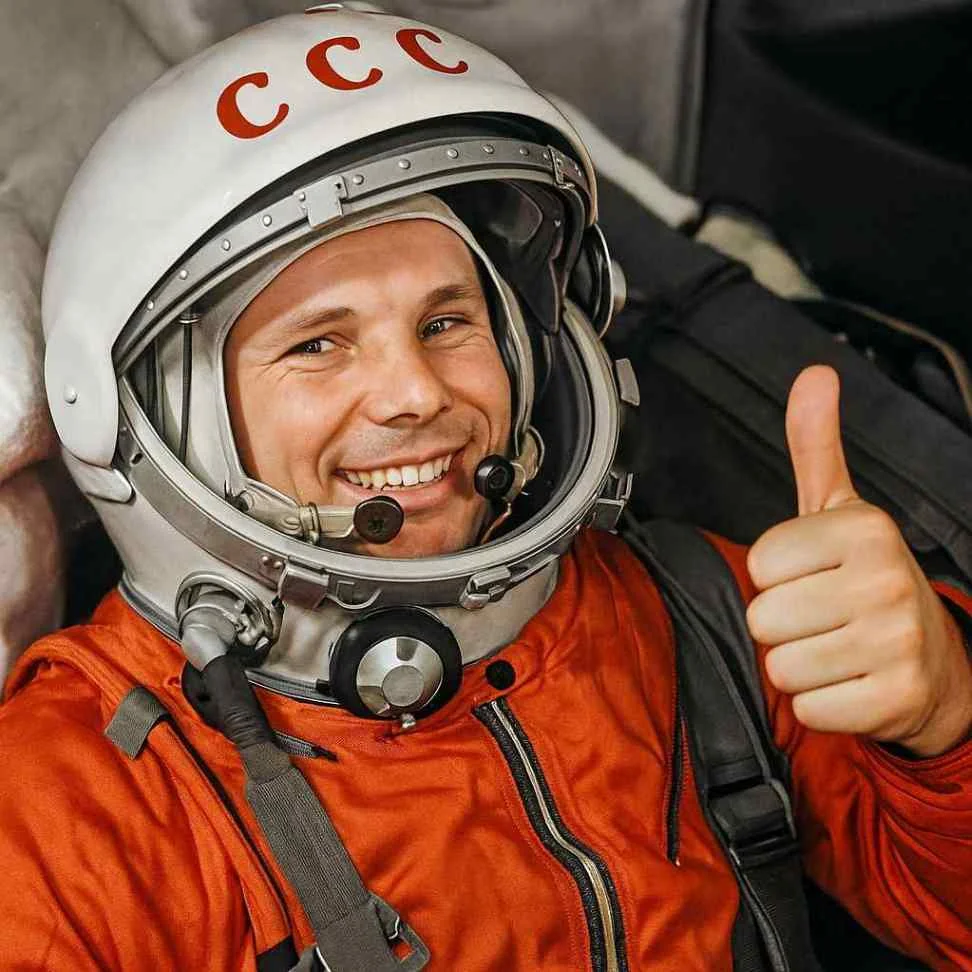
Mission facts | Flight timeline | Control code | Landing | FAQ. Reviewed September 4, 2026. Images are AI-generated illustrations, not archival photographs.
Yuri Gagarin and Vostok 1: Quick Facts
| Fact | Detail |
|---|---|
| Full name | Yuri Alekseyevich Gagarin |
| Born | March 9, 1934; aged 27 at launch |
| Country | Soviet Union (USSR) |
| Spacecraft | Vostok 1, carrying one cosmonaut |
| Launch | April 12, 1961, from Baikonur |
| Rocket | Vostok launcher, an R-7 derivative |
| Mission duration | 108 minutes conventionally; see the timing note below |
| Landing | By parachute near Smelovka, Saratov region |
| Later life | Died March 27, 1968, aged 34; no second spaceflight |
The First Human Spaceflight: April 12, 1961
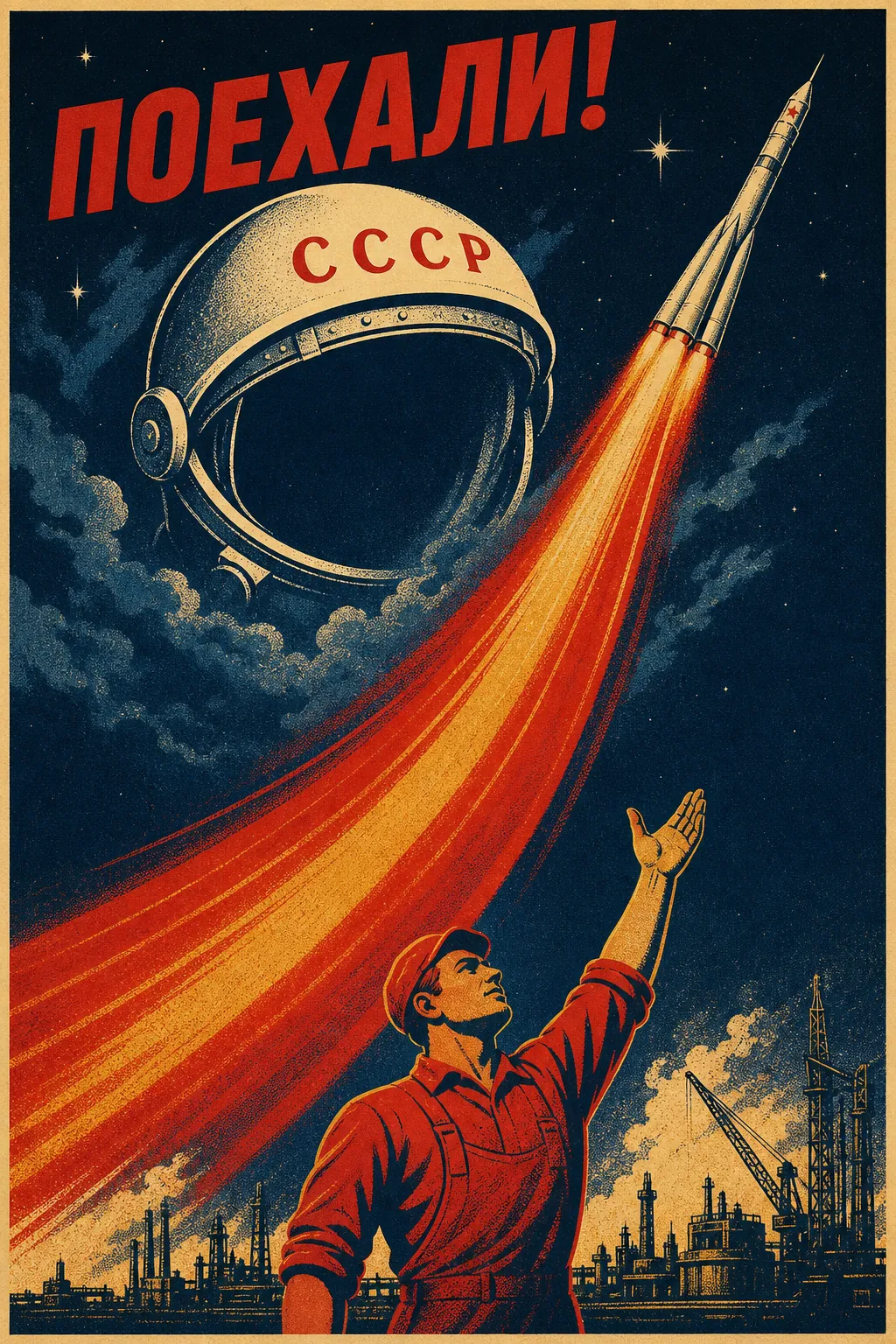
Vostok 1 lifted off at 09:07 Moscow time, or 06:07 UTC. Gagarin's call at departure, "Poyekhali!", is usually translated as "Let's go!" The rocket was descended from the R-7 that had launched Sputnik 1 in 1957, with an added upper stage for the much heavier crewed spacecraft. RussianSpaceWeb's flight history reconstructs the launch from mission records.
The mission tested whether a person could remain conscious, work and communicate during orbital flight, then survive the return. Gagarin reported on his condition and the view outside while the spacecraft's automatic systems handled the flight. Getting him back required a braking burn, separation of the descent capsule and a parachute landing.
How Long Was Gagarin in Space?
108 minutes is the standard answer used by NASA and the FAI, the international aviation record body. It measures the mission from launch to landing, not a full 108 minutes at orbital altitude. Launch at 09:07 and the conventional landing time of 10:55 Moscow time produce that total.
There is a documented timing difference. Anatoly Zak's landing investigation cites a Soviet report dated May 29, 1961, published in 2011, that places Gagarin's touchdown at 10:53. That gives 106 minutes. The difference concerns the recorded landing time; it does not change his status as the first human in space.
Vostok 1 Flight Timeline
| Phase | What happened |
|---|---|
| 09:07 Moscow time | Launch from Baikonur, April 12, 1961. |
| Ascent and orbit | The upper stage placed Vostok 1 in orbit; Gagarin reported his condition by radio. |
| Braking burn | The retrorocket slowed the spacecraft for its return. |
| Reentry | A propulsion fault delayed module separation and the spacecraft tumbled before the descent capsule separated. |
| About 7 km altitude | Gagarin ejected for his separate parachute descent. |
| Ground landing | Near Smelovka: conventionally 10:55, or 10:53 in the later-published postflight report. |
Why Was Yuri Gagarin Chosen?
Gagarin entered the first Soviet cosmonaut group in 1960. Its 20 members were military pilots screened through medical examinations and physical testing. A smaller group received accelerated preparation for Vostok. NASA's selection history describes the process and the changing shortlist, rather than reducing the choice to Gagarin's smile or public image.

Gherman Titov became Gagarin's backup. Both had trained for a small capsule, isolation, high acceleration and a landing under a personal parachute. Sergei Korolev's bureau developed the spacecraft and launcher, while military and medical teams prepared the crew. Gagarin's flight depended on that wider organization.
Vostok 1's Automatic Controls and the Code 125
Vostok combined a spherical descent capsule with an equipment module. The FAI mission account gives the spacecraft's mass as 4,725 kilograms. Only the descent capsule was intended to return intact. The R-7 family guide distinguishes the spacecraft from the launcher that carried it.
Boris Chertok identifies the manual-control code as 125 in Rockets and People, volume 3, printed page 62 (PDF page 97). Officials supplied it in a sealed envelope as a test of the cosmonaut's reasoning. Chertok says Ivanovskiy and Gallay told Gagarin the code before launch. Gagarin did not use the override. This is a participant's later memoir, not a recording of their conversation.
Where Gagarin Landed and Why He Ejected
The return included a braking-system fault and delayed separation of the spacecraft's modules. The capsule eventually separated and completed reentry. Zak's reconstruction uses later-released records to question the familiar explanation that a cable simply failed to disconnect. The precise failure sequence should not be treated as settled by that older story.
At about seven kilometers altitude, Gagarin ejected and descended on his own parachute. Chertok describes the landing arrangement on printed page 63 of his memoir (PDF page 98): the capsule and cosmonaut had separate landing systems because of the impact loads at touchdown. Ejection was planned, not a last-second escape from the reentry problem.
Soviet officials initially concealed the separate landing. That raised questions under aviation-record rules, but the FAI continues to recognize Gagarin's first human spaceflight. He landed near Smelovka, south of Engels in the Saratov region, far from his launch site at Baikonur. The secrecy is part of the history; it does not invalidate the flight.
Gagarin, Alan Shepard and John Glenn Compared
| Spacefarer | Mission and date | What the flight achieved |
|---|---|---|
| Yuri Gagarin | Vostok 1, April 12, 1961 | First human in space; first human orbital flight. |
| Alan Shepard | Freedom 7, May 5, 1961 | First American in space; a suborbital flight, 23 days after Gagarin. |
| John Glenn | Friendship 7, February 20, 1962 | First American to orbit Earth; three orbits. |
These are different firsts. Shepard crossed into space but did not orbit Earth on Freedom 7. Glenn achieved an American orbital flight the following year. The sequence explains why Gagarin's mission carried such political weight during the Cold War space race. It also helps separate early Earth-orbit missions from the later race to land on the Moon.
Gagarin After Vostok 1
Gagarin became a public representative of the Soviet space program, but continued his technical training. He served as Vladimir Komarov's backup for Soyuz 1. He never made a second spaceflight. On March 27, 1968, he and instructor Vladimir Seryogin died in a MiG-15UTI training aircraft crash. NASA's account of his later career describes the flight restrictions and training that preceded his death. The precise cause of the crash remains disputed.
His first flight is commemorated each April 12. In 2011 the United Nations designated that date the International Day of Human Space Flight. For the missions that followed Vostok, including Tereshkova's flight and Leonov's spacewalk, see Soviet cosmonauts and human spaceflight.
Gagarin in Soviet Space Art
Gagarin's helmeted portrait and the phrase Poyekhali became recurring subjects in Soviet space propaganda and culture. These contemporary poster illustrations draw on that visual history; they are not original 1961 posters. Physical prints are available through the space poster collection.

Sources and Further Reading
- NASA: Yuri Gagarin, first human in space, the conventional mission date and duration.
- Boris Chertok: Rockets and People, volume 3 (PDF), printed pages 62-63 for the code and landing system.
- FAI: Gagarin's flight and records, recognition by the international record body.
- RussianSpaceWeb: Vostok 1 landing, archival evidence behind the timing and reentry discussion.
- NASA: Remembering Yuri Gagarin, his later training, Soyuz role and death.
Yuri Gagarin FAQ
Who was the first human in space?
Yuri Gagarin, a Soviet cosmonaut, became the first human in space on April 12, 1961. He flew alone aboard Vostok 1 on an orbital mission around Earth. He was 27 years old.
How long was Gagarin in space?
The commonly cited Vostok 1 mission duration is 108 minutes from launch to landing, including ascent and descent. NASA and the FAI use that figure. A Soviet postflight report gives a landing time two minutes earlier, producing a 106-minute duration. Neither figure means 108 minutes entirely at orbital altitude.
What was Gagarin's 1-2-5 control code?
125 enabled Vostok's backup manual controls. Boris Chertok describes the code in Rockets and People, volume 3, printed page 62. It was supplied in a sealed envelope; Chertok says Oleg Ivanovskiy and Mark Gallay also told Gagarin the code before launch. Gagarin did not need to use the override.
Where did Yuri Gagarin land?
Gagarin landed by parachute near Smelovka, south of Engels in the Saratov region of the Soviet Union, now Russia. He launched from Baikonur in what is now Kazakhstan. His landing site and launch site were in different Soviet republics.
Why did Gagarin eject from Vostok 1?
Ejection was part of Vostok's planned landing procedure. The capsule could survive reentry but could not give its occupant a sufficiently soft ground landing. Gagarin ejected at about 7 kilometers altitude and descended on his own parachute; the capsule landed separately.
Was Yuri Gagarin the first man on the Moon?
No. Gagarin's 1961 mission orbited Earth. Neil Armstrong became the first person to walk on the Moon during Apollo 11 in July 1969. Gagarin never flew a lunar mission.
Did Gagarin go to space more than once?
No. Vostok 1 was his only spaceflight. He later trained for the Soyuz program and served as Vladimir Komarov's backup for Soyuz 1, but he did not launch again.
How did Yuri Gagarin die?
Gagarin died on March 27, 1968, aged 34, when a MiG-15UTI training aircraft crashed with him and instructor Vladimir Seryogin aboard. The precise cause remains disputed. His death was in an aircraft accident, not a spaceflight.