Still Flying in 2026
Six decades after Sputnik, the most striking thing about the Soviet space program is how much of it never stopped working. Spacecraft designs traceable to Sergei Korolev's OKB-1 bureau are still ferrying humans to orbit. Rocket engines designed in the 1990s by Soviet-trained engineers were still launching American military satellites until July 2024. The Russian half of the International Space Station is built around modules that were finalized while the USSR still existed.
This page is about that present-tense legacy. The cultural and propaganda story is on the Cultural Impact page. The origins-to-Mir engineering arc is on Rocket Development and Space Stations. What follows is what is still in service in 2026, what records still stand, and what is finally winding down.
Soyuz: The Last Soviet Spacecraft Still Flying
Soyuz first flew on April 23, 1967. That flight ended in tragedy when Vladimir Komarov died on reentry. Every single human-spaceflight program that has flown since traces some lineage to it, but only Soyuz itself has continued unbroken.
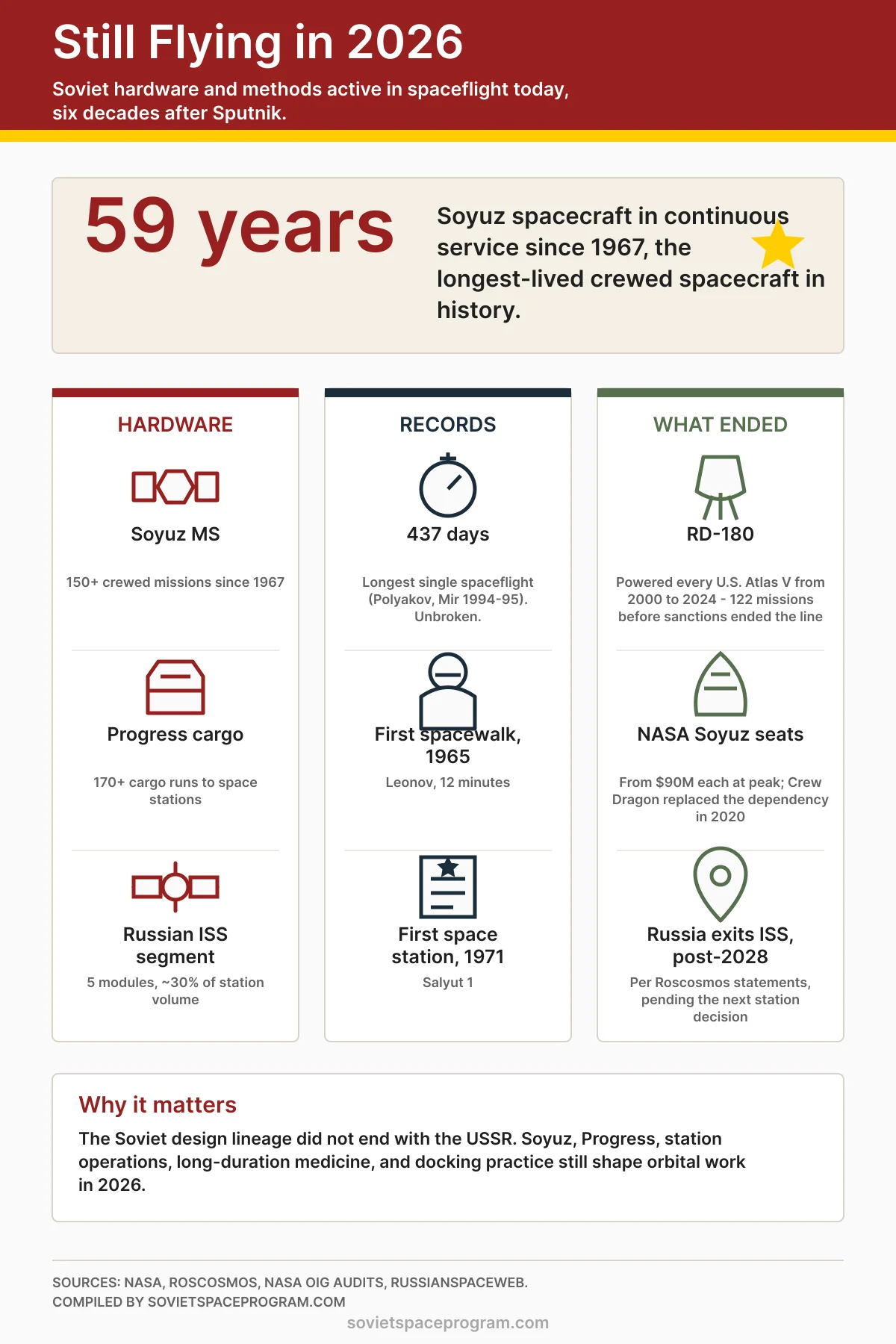
As of May 2026, Soyuz has carried roughly 150 crewed missions, per the list maintained on Wikipedia and cross-checked against NASA crew logs. The modernized Soyuz MS variant, first flown in July 2016, accounts for the most recent 28 of those. Soyuz MS-29 is scheduled for July 2026.
NASA still rides Soyuz in 2026 - not by paying for seats anymore, but by trading them. After Crew Dragon Demo-2 in May 2020, NASA stopped writing checks to Roscosmos. Instead, the two agencies barter under an integrated crew agreement: a NASA astronaut goes up on Soyuz, a Roscosmos cosmonaut comes back on Crew Dragon, no money changes hands. Frank Rubio was the last NASA astronaut to launch on a Soyuz under the old paid arrangement, in September 2022.
At its peak, NASA paid Russia $90.25 million per Soyuz seat - the October 2020 ride for Kathleen Rubins, documented by NASA's Office of Inspector General. The seat-cost curve from 2006 to 2020 climbed steadily from around $20 million to nearly six times that.
Progress, the uncrewed cargo variant of Soyuz, has run 182 missions) since 1978. It has supplied Salyut 6, Salyut 7, Mir, and the ISS Russian segment. Three of those flights failed; one of them, Progress M-12M in August 2011, briefly grounded all crewed traffic to the ISS because it used the same upper stage as Soyuz.
The RD-180 Era Ends
From 2000 to 2024, every American Atlas V rocket used a Russian engine. The RD-180 was developed in the 1990s by NPO Energomash, descendant of one of Valentin Glushko's bureaus, and licensed to United Launch Alliance for the Atlas V's first stage. It powered 122 missions before the line shut down.
Three things ended it. The 2014 sanctions over Crimea raised the first political alarm and the 2016 National Defense Authorization Act required the Department of Defense to stop buying launches that depended on RD-180 after 2022. NPO Energomash made its final shipment of engines in April 2021, per TASS. The last Atlas V national-security mission using the engine was USSF-51, on July 30, 2024.
Atlas V itself is still finishing out its commercial backlog through 2026, including Boeing's Starliner and Amazon's Project Kuiper. After that, the replacement is Vulcan Centaur, which uses two Blue Origin BE-4 methane engines instead. Vulcan's first flight was January 8, 2024.
Records Still Standing in 2026
Some Soviet and Russian spaceflight records have been broken in the past three decades. Others have not been touched. The ones below are still on the books as of May 2026.
One former Soviet record fell as recently as December 2024. The longest single spacewalk used to be 8 hours 56 minutes (Voss and Helms, ISS, March 2001). On December 17, 2024, Chinese astronauts Cai Xuzhe and Song Lingdong went 9 hours 6 minutes outside Tiangong, per Guinness World Records. The two agencies measure EVA duration slightly differently (hatch-to-hatch versus battery time), so historians of spaceflight will likely keep arguing about it.
The Russian Segment of the ISS
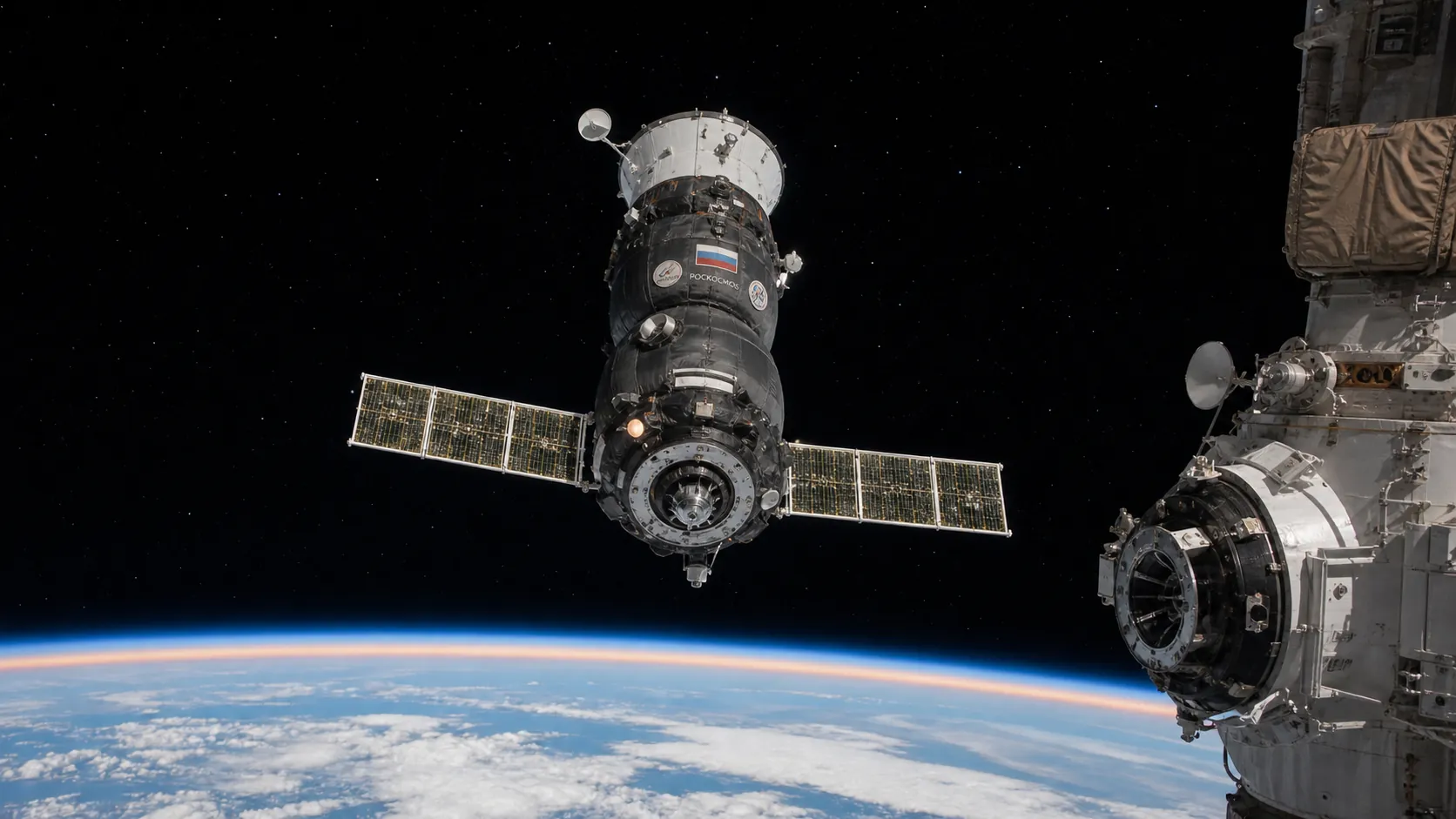
The ISS has been operating since 1998 with two functionally distinct halves. The U.S. Orbital Segment was built and is run by NASA, ESA, JAXA, and CSA. The Russian Orbital Segment was built and is run by Roscosmos. In 2026 the two segments still depend on each other for power, attitude control, life support, and crew rotation.
Six Russian-built modules are operational in 2026: Zarya (1998), Zvezda (2000), Poisk (2009), Rassvet (2010), Nauka (2021), and Prichal (2021). Zarya was financed by NASA but built in Moscow by Khrunichev, which is why it shows up on some lists as American-owned. A seventh module, Pirs, was deorbited on July 26, 2021, to free up a docking port for Nauka - the first time an ISS module was ever decommissioned.
Russia's commitment to the station has been narrowing. In July 2022, Roscosmos director Yuri Borisov said Russia would leave the ISS "after 2024." By 2024, the timeline had drifted to 2028 to match the formal U.S.-Russia partnership agreement. In 2026, Roscosmos Director General Dmitry Bakanov confirmed via TASS that Russia would remain on the station through 2028, then begin transition to the planned Russian Orbital Station, with full ISS deorbit targeted for 2030.
If those dates hold, the ISS will end in roughly its 32nd year of continuous operation. For comparison, Mir lasted 15 years.
What Mir Taught the Rest of Spaceflight
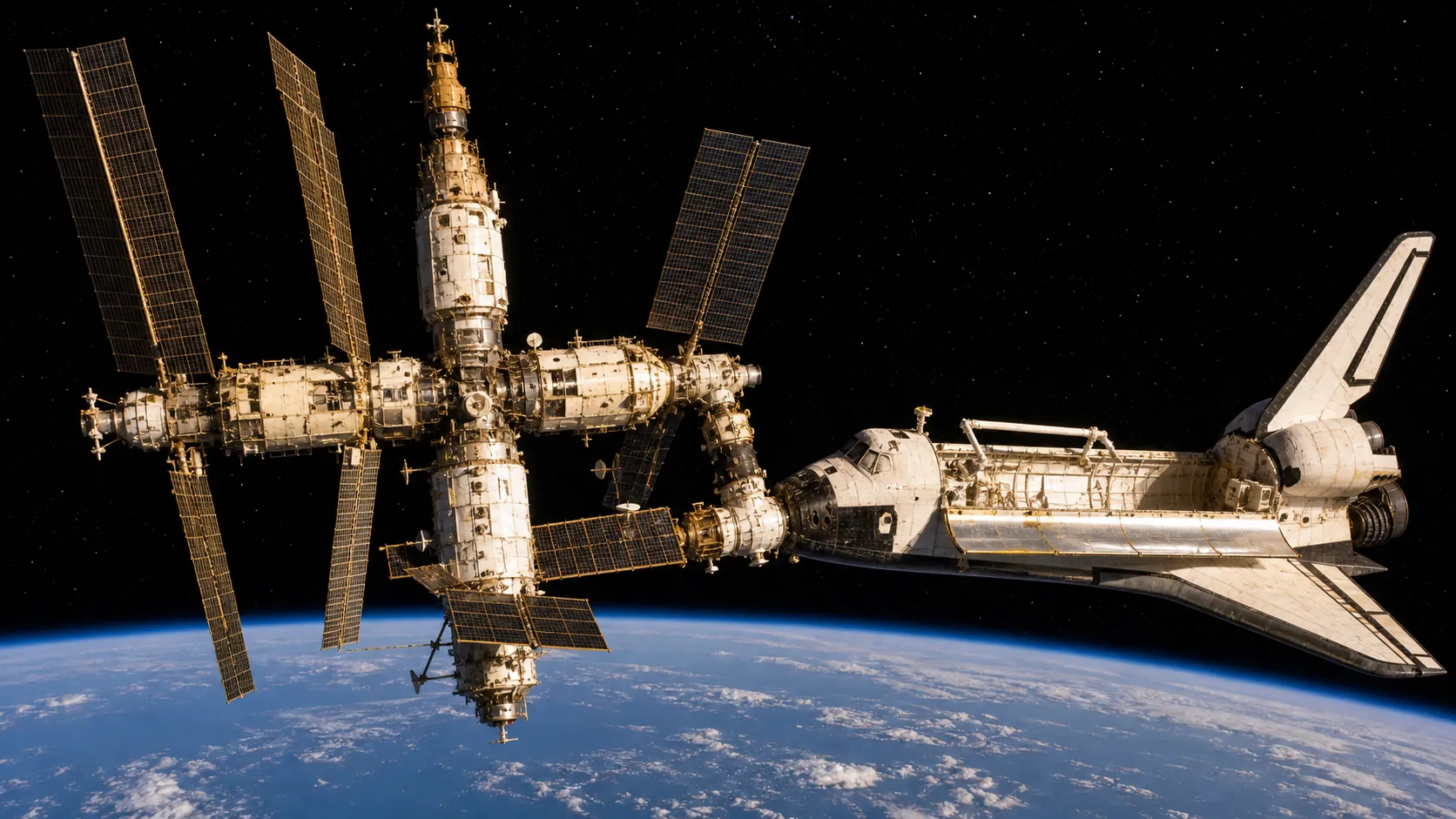
Mir was the bridge between Salyut-style temporary outposts and the ISS as we know it. Continuous human occupation began on September 5, 1989, and ended on August 28, 1999 - eight days short of a full ten years. Over Mir's 15-year operational life, it hosted 125 visitors from 12 countries.
Roscosmos reports about 23,000 scientific experiments were conducted aboard Mir over that span. Independent audits of that number do not exist, so treat it as a Roscosmos-origin figure. What is independently documented is that NASA's Shuttle-Mir program from 1995 to 1998 was an operational dress rehearsal for the ISS. Seven Shuttle missions docked with Mir. Seven American astronauts lived on board for extended stays. The bone-density studies, the resistance-exercise hardware, the water-recycling protocols, the psychological-support frameworks for long-duration crew - all of it was iterated on Mir first and then formalized into ISS standards.
Frank Rubio's 371-day stay on the ISS in 2022 and 2023 was, in NASA's framing, a continuation of that Mir-era research program. The Soviet Union ran the only long-duration human-spaceflight school for two decades. Everyone else inherited the curriculum.
Roscosmos in 2026
The agency that inherited the Soviet program is a smaller, narrower version of it. The 2025 federal space budget was about 317.5 billion rubles, which is roughly $3.4 billion at 2025 exchange rates. NASA's 2025 budget was about $25 billion. The gap is wider than the headline ratio suggests because Russian internal costs do not scale the same way.
Russia's commercial launch market has effectively disappeared. In the late 1990s and 2000s, Russian rockets handled roughly half of all global commercial launches by some measures. After the 2022 invasion of Ukraine, at least 16 commercial contracts were cancelled, OneWeb pulled its satellites out of Baikonur mid-campaign, and the European Space Agency suspended cooperation. The commercial pipeline is essentially zero in 2026.
The Russian Lunar program has also slipped. Luna-25 crashed into the Moon's surface on August 19, 2023, on what was supposed to be Russia's first successful lunar landing in 47 years. As of May 2026, Luna-26 has not flown. The April 2026 Roscosmos timeline, reported by Meduza, slipped Luna-26 to 2027 to 2028 and Luna-27 to 2029 to 2030.
Where the Russian program is growing is in partnership with China. The two countries signed a memorandum of understanding for the International Lunar Research Station in March 2021. A nuclear-power-plant MoU followed in May 2025. The roadmap calls for construction to start in 2031. ILRS is, in effect, the partnership the Russian-American ISS once was, but with the political polarity reversed.
The Sputnik Shock, Still Echoing
The most-cited long-term legacy of the Soviet space program is not a piece of hardware. It is the institutional response that one launch in October 1957 produced inside the United States. The full story is on the Historical Context page; the short version is that 9 months and 25 days after Sputnik 1 lifted off, President Eisenhower signed the National Aeronautics and Space Act, creating NASA.
Around the same time, Congress passed the National Defense Education Act of 1958, which authorized roughly $1 billion across four years for science, mathematics, and foreign-language education, starting at $183 million in fiscal year 1959. The National Science Foundation's appropriation jumped from $40 million in FY1958 to $134 million in FY1959, per the National Academies historical record.
American R&D spending roughly tripled from the mid-1950s to the mid-1960s. How much of that surge is attributable to Sputnik specifically versus the broader Cold War buildup is contested by historians of science policy, but the timing is hard to argue with. The American technological base of the second half of the 20th century - silicon, semiconductors, computing, advanced materials, the modern research university - sits on funding lines that opened or widened in the late 1950s.
That is the legacy that does not appear on any spacecraft. The Soviet space program did more than fly cosmonauts. It rewrote the budget of its rival.
Frequently Asked Questions
Are Soyuz spacecraft still flying in 2026?
Yes. The modernized Soyuz MS variant has flown about 28 missions since 2016 and continues to ferry crew to the ISS. NASA astronauts still ride Soyuz under a no-funds-exchanged seat-barter arrangement with Roscosmos. Soyuz MS-29 is scheduled for July 2026.
Who holds the record for longest single spaceflight?
Valeri Polyakov, with 437 days 17 hours 58 minutes aboard Mir from January 1994 to March 1995. No one has come within 60 days of that mark. Frank Rubio's 371 days in 2022 to 2023 on the ISS is the closest challenger and the American record. See Wikipedia: Valeri Polyakov.
When will Russia leave the International Space Station?
Roscosmos has committed to the ISS through 2028. After that, Russia plans to transition to the planned Russian Orbital Station. The full ISS is targeted for deorbit in 2030, with Russia's segment exiting first (TASS, 2026 statement).
What happened to RD-180 engines in U.S. rockets?
The Atlas V's RD-180 era ended in 2024. NPO Energomash made its final delivery in April 2021 (TASS) and the last Atlas V flight using the engine was the USSF-51 national-security mission on July 30, 2024. Vulcan Centaur, the successor rocket, uses U.S.-built Blue Origin BE-4 engines instead.
What is the current Russian lunar program status?
Stalled. Luna-25 crashed on the Moon on August 19, 2023. As of May 2026, Luna-26 has not launched. The April 2026 Roscosmos timeline slipped Luna-26 to 2027 to 2028 and Luna-27 to 2029 to 2030 (Meduza). Russia's near-term lunar ambitions are increasingly tied to the China-led International Lunar Research Station, with construction targeted to start in 2031.
How much Soviet-designed hardware is still on the ISS?
Six Russian-built modules are operational in 2026: Zarya (1998), Zvezda (2000), Poisk (2009), Rassvet (2010), Nauka (2021), and Prichal (2021). They contribute roughly a quarter of the station's pressurized volume and provide core life-support, attitude-control, and propulsion functions that the U.S. segment depends on. Soyuz and Progress provide crew rotation and cargo resupply alongside Crew Dragon and Cygnus.