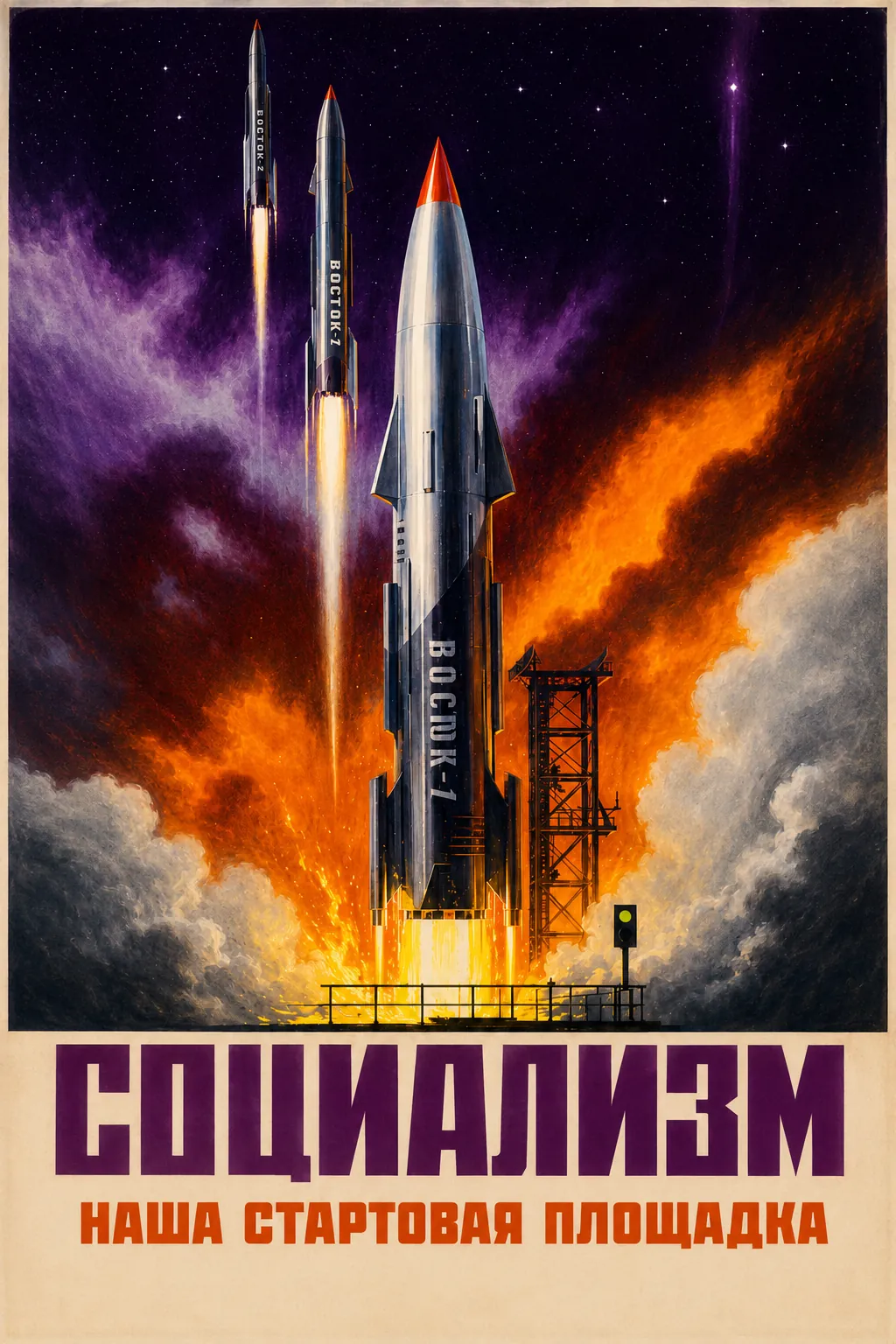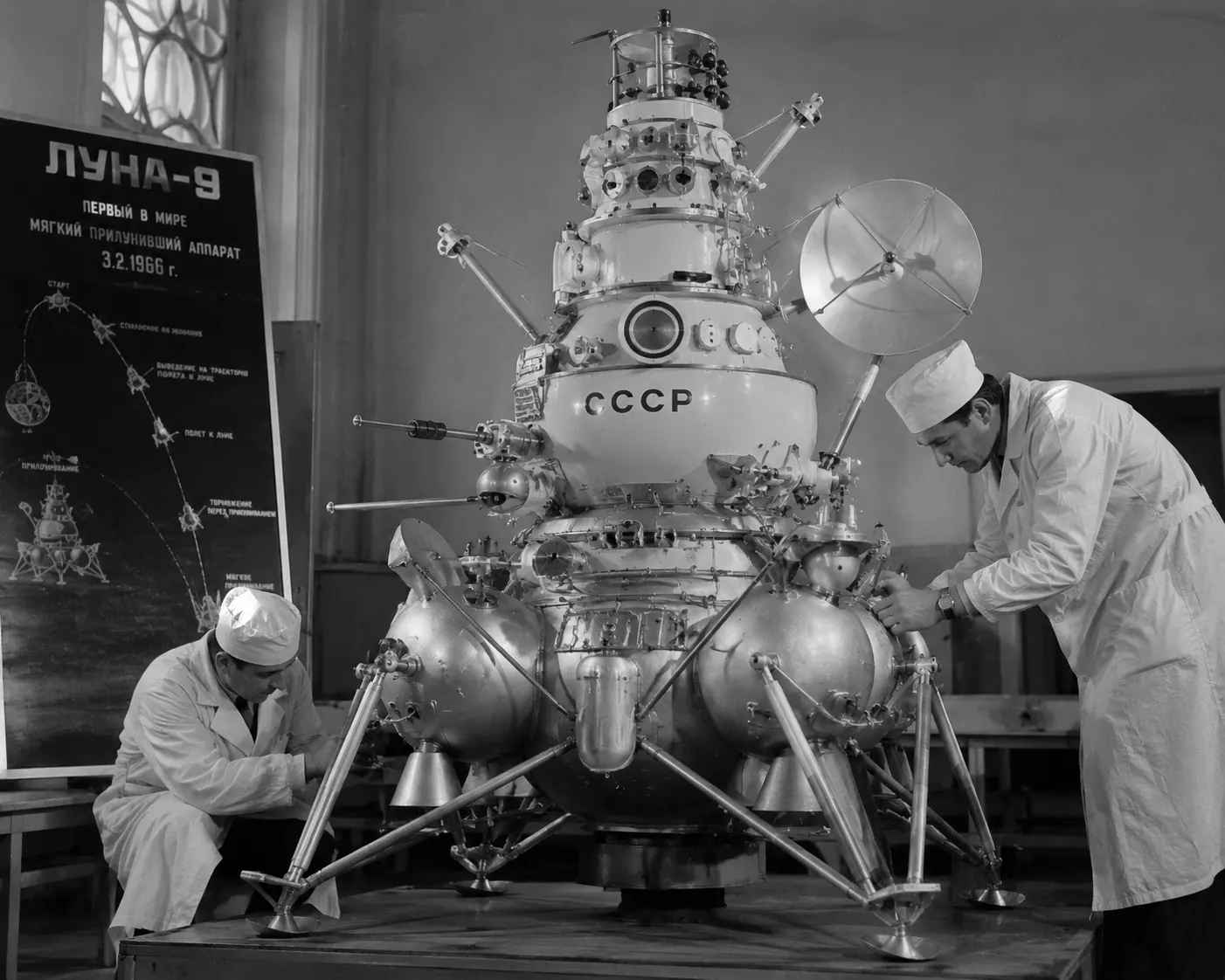
Illustration of Soviet lunar spacecraft assembly, not an archival photograph of Luna 16.
Luna 16 returned to Earth on September 24, 1970, carrying about 101 grams of lunar material. It was the first robotic mission to bring a sample back from the Moon.
The anniversary belongs to the recovery of that capsule, four days after the spacecraft landed on the lunar surface. Its achievement was a complete round trip, with the collection, ascent and return performed without astronauts aboard.
What did Luna 16 have to do?
A sample-return flight has several finish lines. Reaching the Moon leaves the hardest questions unanswered: can the spacecraft land intact, collect material, transfer it into a protected container and launch that container back toward Earth?
Luna 16 completed that chain. The NASA mission account records a September 12 launch, September 20 landing, September 21 departure and September 24 return.
The landing site was on the basaltic plains of Mare Fecunditatis. Sampling took place after sunset. That detail matters because the mission could not depend on the kind of sunlit fieldwork associated with Apollo astronauts.
A mechanism had to obtain material at the spot where the lander came to rest, then get it into the return capsule. The table below keeps those operations separate so the landing date is not mistaken for the date scientists received the sample.
Why did a small sample matter?
A hundred grams sounds modest beside the material brought home by Apollo. Its value was in access to a different location and in demonstrating another way to collect extraterrestrial material.
A returned sample can be examined repeatedly with laboratory equipment; it does not have to yield every answer through instruments carried on the original spacecraft. A sample's location and handling history matter alongside its mass.
The Lunar and Planetary Institute's mission inventory places Luna 16 within a much larger sequence of attempts. Later robotic returns by Luna 20 and Luna 24 made it a method the Soviet program used again.
The Smithsonian's review of the sample-return missions is useful for comparing the three collections without treating them as substitutes for Apollo's field geology.
Where does it fit in the Moon race?
September 1970 came after Apollo 11 and Apollo 12. Calling Luna 16 the first lunar sample return would erase those flights. Calling it merely a consolation prize would miss the engineering result.
The precise claim is the first robotic return of lunar material. It belongs in the history of Soviet robotic missions as well as the history of the crewed Moon competition.
The distinction also helps explain the program's range. While designers worked on large lunar launchers, robotic spacecraft were attempting tasks with different payloads and mission plans. Use the program timeline to compare those efforts by date, rather than assuming every Soviet lunar mission served the same immediate objective.
Luna 16 Sample-Return Timeline
Four mission dates, with the achievement at each stage and its source. Dates are calendar dates, not a reconstruction of every maneuver.
| Date | Stage | What happened | Source |
|---|---|---|---|
| 1970-09-12 | Launch | Spacecraft departed Earth | science.nasa.gov |
| 1970-09-20 | Lunar landing | Reached Mare Fecunditatis and collected material | science.nasa.gov |
| 1970-09-21 | Lunar departure | Sample began its return journey | science.nasa.gov |
| 1970-09-24 | Earth recovery | About 101 grams of lunar material returned | science.nasa.gov |
Download the source-linked reference table (CSV). Permanent link to this table. Cite this article and the original sources listed in each row.
Frequently Asked Questions
Was Luna 16 the first mission to return Moon rocks?
No. Apollo 11 and Apollo 12 returned lunar samples before it. Luna 16 was the first robotic lunar sample-return mission.
Did Luna 16 land on September 24?
Its return capsule reached Earth on September 24, 1970. The spacecraft had landed on the Moon on September 20.
How much material did Luna 16 return?
NASA records about 101 grams of lunar material, collected in Mare Fecunditatis. That figure describes the returned sample, not the spacecraft's mass.
Follow the Soviet space program timeline for the missions and decisions surrounding this date, or browse more space history articles.
By Soviet Space Program. Published . Historical date: .