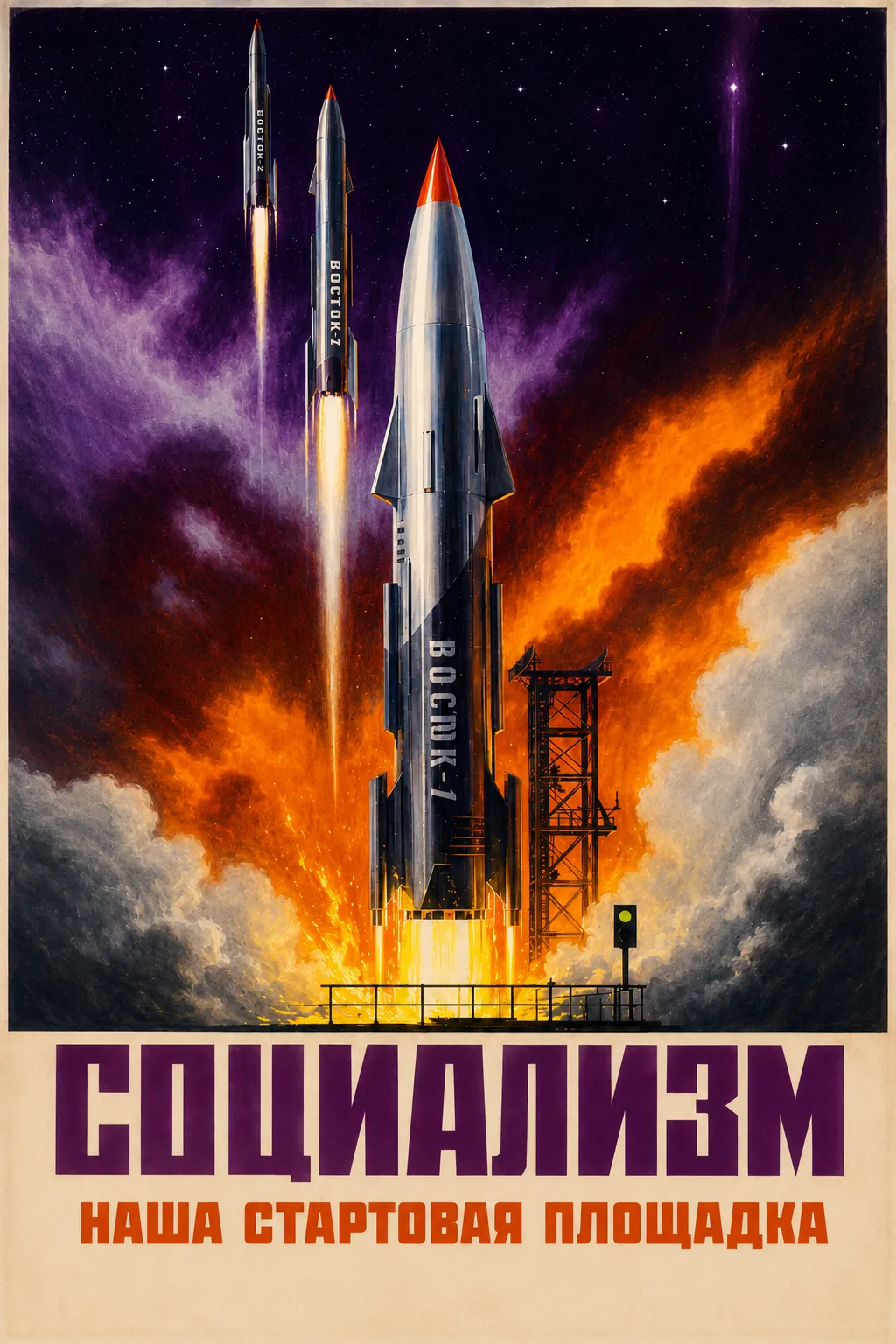
Illustration of Soyuz spacecraft technology. This is not a photograph of the Cosmos 186 and 188 docking.
Cosmos 186 and Cosmos 188 completed the first automatic docking in space on October 30, 1967. The two uncrewed Soyuz test vehicles joined mechanically without cosmonauts aboard.
Their electrical connection did not complete, and the two recovery attempts had different outcomes. Remembering those limits gives a more useful account than treating the entire flight as an uncomplicated success.
How did Cosmos 186 meet Cosmos 188?
Cosmos 186 launched first, on October 27. Cosmos 188 followed on October 30 and served as the passive target for the active spacecraft. NASA's history of the docking records that contact occurred 62 minutes after the second launch. The vehicles remained mechanically attached for about three and a half hours.
Rendezvous and docking are related but separate operations. Rendezvous brings vehicles close with compatible motion. Docking requires controlled contact and attachment.
A successful attachment still leaves questions about electrical interfaces, pressure seals and the transfer of people or supplies. This test proved a particular part of that chain; it did not demonstrate every capability later associated with a space-station visit.
What worked, and what did not?
The mechanical connection held, while the electrical connection did not. Recovery added another split result. Cosmos 186's descent module was recovered, but Cosmos 188 was destroyed during its return. RussianSpaceWeb's recovery account examines those return-flight problems rather than ending the story at the docking photograph.
A component-level record is useful for comparing test flights. An overall success label can conceal an interface failure; an overall failure label can hide a demonstrated capability.
The table below keeps rendezvous, attachment, electrical connection and recovery in separate rows. Those categories help explain what engineers could carry forward and what still needed attention.
Why was this test important in 1967?
The flight came after the fatal Soyuz 1 mission in April. Uncrewed testing was part of the effort to return Soyuz to crewed service. Asif Siddiqi's Challenge to Apollo places the docking work inside the Soviet lunar and human-spaceflight programs, rather than treating it as an isolated demonstration.
Automatic rendezvous and docking later supported Salyut and Mir operations. The long-term value lay in repeatable meetings between separately launched spacecraft.
For related context, the human-spaceflight history follows Soyuz's development and the technology guide explains docking as a spacecraft system. None of that later usefulness removes the need to state the 1967 test's actual limits.
Cosmos 186/188 Test-Outcome Matrix
Separate results for the October 1967 demonstration. A mechanical docking is not the same claim as a fully working electrical interface or two successful recoveries.
| Operation | Recorded outcome | Interpretation | Source |
|---|---|---|---|
| Automatic rendezvous and contact | Completed on 1967-10-30 | Uncrewed vehicles met and attached | nasa.gov |
| Mechanical attachment | Held for about 3.5 hours | Docking hardware joined the vehicles | nasa.gov |
| Electrical connection | Not completed | Mechanical attachment did not prove every interface | nasa.gov |
| Cosmos 186 recovery | Descent module recovered | One return sequence ended in recovery | russianspaceweb.com |
| Cosmos 188 recovery | Spacecraft destroyed during return | The second recovery did not succeed | russianspaceweb.com |
Download the source-linked reference table (CSV). Permanent link to this table. Cite this article and the original sources listed in each row.
Frequently Asked Questions
Were Cosmos 186 and 188 crewed?
No. They were uncrewed Soyuz test spacecraft. No cosmonauts were aboard during the automatic docking.
Are Cosmos and Kosmos different spacecraft names?
They are alternative English transliterations of the same Soviet designation. Cosmos 186 and Kosmos 186 identify the same mission.
Was the first automatic docking completely successful?
The spacecraft joined mechanically, but their electrical connection did not complete. Their recovery outcomes also differed, so the achievement needs those qualifications.
Follow the Soviet space program timeline for the missions and decisions surrounding this date, or browse more space history articles.
By Soviet Space Program. Published . Historical date: .